Introduction
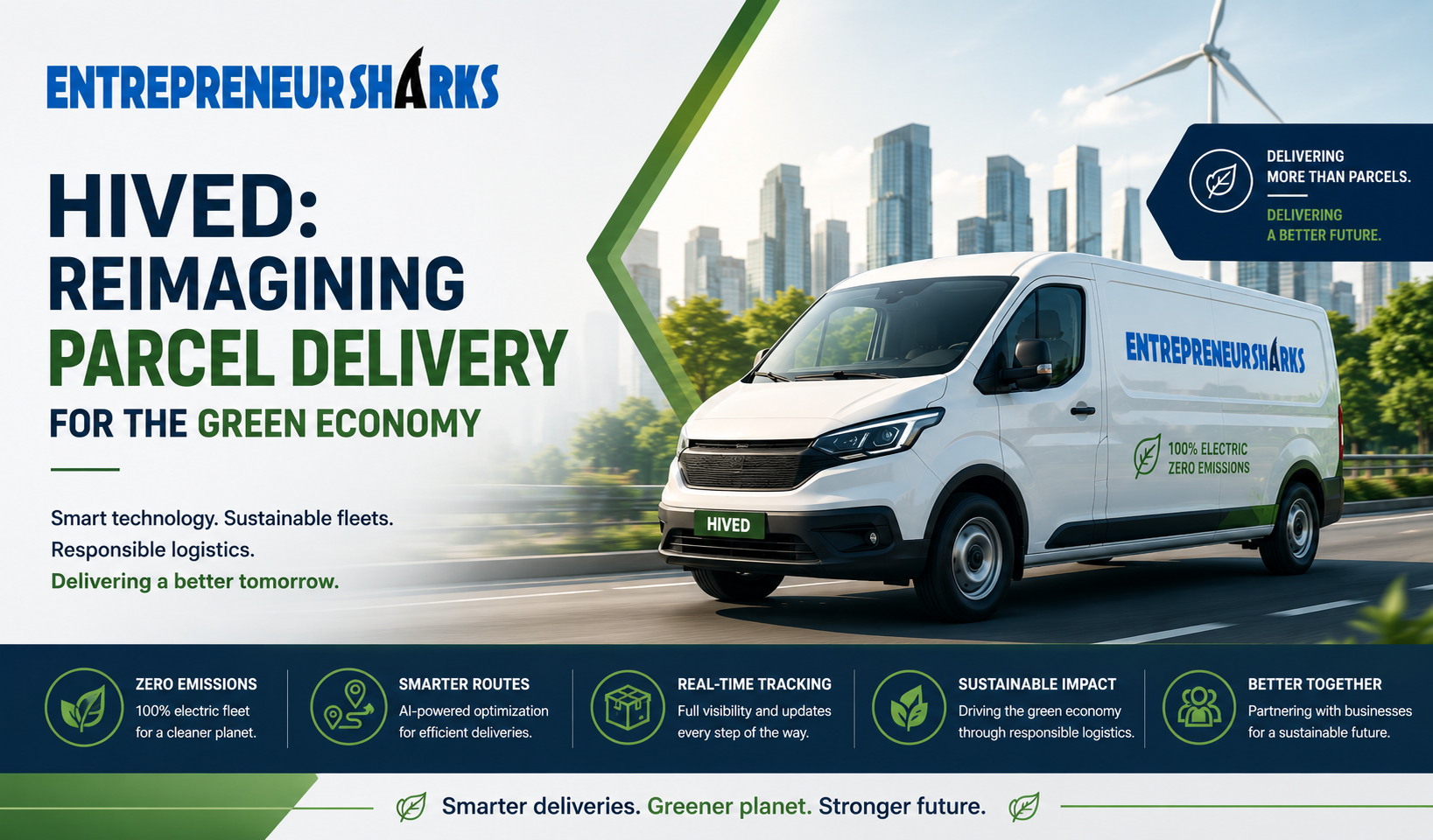
As the global economy rapidly shifts toward sustainability, industries across the world are being forced to rethink how they operate. One of the sectors under the most pressure is logistics and parcel delivery. With e-commerce booming and millions of packages moving daily through urban centers, traditional delivery systems have become major contributors to carbon emissions, traffic congestion, and environmental waste. Amid this transformation, HIVED has emerged as a forward-thinking company determined to redefine parcel delivery for the green economy.
HIVED is not simply another logistics startup. It represents a new generation of businesses designed around sustainability from the ground up. By combining electric transportation, advanced technology, optimized delivery systems, and a customer-first approach, HIVED is creating a cleaner, smarter, and more efficient future for urban logistics.
The Growing Need for Sustainable Logistics
The modern consumer expects speed, convenience, and transparency when ordering products online. Same-day and next-day deliveries have become standard expectations, placing immense pressure on logistics companies to move parcels faster than ever before. However, this convenience comes with environmental costs.
Traditional delivery fleets often rely heavily on diesel-powered vans and inefficient routing systems that contribute significantly to greenhouse gas emissions. Urban areas suffer from increased pollution, noise, and traffic congestion due to constant delivery activity. As governments introduce stricter environmental regulations and consumers become more environmentally conscious, logistics providers are facing a major challenge: how to maintain fast delivery while reducing environmental impact.
This is where HIVED enters the conversation. The company was built with the understanding that sustainability should not be an afterthought. Instead, it should serve as the foundation of the entire delivery ecosystem.
Building a Delivery System for the Green Economy
HIVED’s mission revolves around creating a delivery infrastructure that aligns with the needs of a green economy. Rather than retrofitting old systems, the company has developed a logistics model specifically designed for low-emission urban transportation.
One of HIVED’s most important innovations is its fully electric delivery fleet. Electric vehicles dramatically reduce carbon emissions compared to traditional fuel-powered vans, helping cities improve air quality while supporting climate goals. By removing fossil fuel dependency from the last-mile delivery process, HIVED is helping businesses reduce their environmental footprint without compromising efficiency.
The company also focuses heavily on smart route optimization. Using advanced algorithms and real-time data, HIVED ensures drivers follow the most efficient delivery paths possible. This reduces unnecessary mileage, minimizes energy consumption, and enables faster deliveries for customers.
In addition, HIVED leverages technology to create greater visibility throughout the delivery process. Customers can track parcels in real time, receive accurate delivery windows, and enjoy a smoother user experience. Transparency not only improves customer satisfaction but also helps reduce failed delivery attempts, which are a major source of waste and inefficiency in logistics operations.
Technology at the Core of Innovation
Technology plays a central role in HIVED’s strategy. Unlike many legacy logistics companies that struggle with outdated infrastructure, HIVED was designed as a tech-enabled platform from day one.
The company integrates artificial intelligence, machine learning, and predictive analytics into its operations to improve delivery efficiency and reduce operational waste. Data-driven decision-making allows HIVED to forecast demand patterns, allocate delivery resources intelligently, and continuously improve network performance.
Automation also helps streamline warehouse operations and parcel sorting. Faster processing times enable quicker deliveries while reducing energy consumption and labor inefficiencies. The result is a logistics ecosystem capable of scaling sustainably as e-commerce demand continues to grow.
Another important aspect of HIVED’s technology-driven approach is customer communication. Consumers increasingly expect real-time updates and flexible delivery options. HIVED’s digital platform empowers customers with more control over their deliveries, creating a seamless experience that aligns with modern expectations.
By combining sustainability with intelligent technology, HIVED demonstrates that environmentally responsible logistics can also be highly efficient and commercially competitive.
Supporting E-Commerce Brands with Sustainable Delivery
Many e-commerce companies today are actively searching for ways to improve their sustainability credentials. Consumers are paying closer attention to how products are sourced, packaged, and delivered. Businesses that fail to demonstrate environmental responsibility risk losing customer trust and market relevance.
HIVED offers brands an opportunity to align their logistics operations with sustainability goals. Through zero-emission delivery solutions and transparent environmental reporting, businesses can reduce their carbon footprint while strengthening their reputation among environmentally conscious consumers.
This partnership model is particularly important in the fashion, beauty, electronics, and lifestyle sectors, where sustainability has become a major purchasing factor. By working with HIVED, brands can provide customers with eco-friendly delivery options that support broader corporate sustainability initiatives.
Moreover, HIVED’s efficient delivery infrastructure helps businesses maintain speed and reliability without sacrificing environmental responsibility. This balance between convenience and sustainability is becoming increasingly essential in the competitive e-commerce landscape.
Redefining Urban Mobility
Urban environments are evolving rapidly as cities search for ways to reduce pollution and improve transportation efficiency. Governments across Europe and other global markets are introducing low-emission zones, stricter vehicle regulations, and sustainability targets aimed at creating cleaner cities.
HIVED fits naturally into this transformation. Its electric delivery network aligns with future urban mobility strategies while helping reduce congestion and environmental impact. Smaller electric vehicles are often more adaptable to crowded city environments, enabling faster navigation through urban streets while generating less noise and pollution.
The company’s approach also supports the broader vision of smart cities, where technology and sustainability work together to create more livable urban spaces. Efficient logistics networks are critical to this future because e-commerce demand is unlikely to slow down anytime soon.
By reimagining parcel delivery through the lens of sustainability, HIVED is contributing to a larger movement toward cleaner and more intelligent urban infrastructure.
Challenges and Opportunities Ahead
Like any innovative company, HIVED faces challenges as it scales its operations. Building electric fleets, maintaining charging infrastructure, and competing with established logistics giants require substantial investment and operational discipline.
Additionally, the logistics industry remains highly competitive, with pressure to deliver parcels faster and cheaper. Balancing profitability with sustainability goals can be difficult, especially in markets where consumers still prioritize convenience and low costs over environmental considerations.
However, the long-term opportunities are enormous. Governments, investors, and consumers are increasingly supporting businesses that prioritize sustainability. Companies capable of delivering both operational excellence and environmental responsibility are likely to dominate the next era of logistics.
As battery technology improves, renewable energy adoption increases, and urban sustainability policies expand, HIVED is well-positioned to benefit from these global trends.
Conclusion
HIVED represents more than a parcel delivery company. It symbolizes the future of sustainable logistics in an economy increasingly shaped by environmental responsibility and technological innovation. By building a fully electric, technology-driven delivery ecosystem, HIVED is proving that fast and reliable logistics can coexist with sustainability.
In a world where climate concerns are reshaping consumer expectations and business priorities, companies like HIVED are becoming essential drivers of change. Their success demonstrates that sustainability is no longer just a corporate buzzword—it is a strategic necessity for the future.
As e-commerce continues to grow and cities pursue greener infrastructure, HIVED’s vision of clean, intelligent, and customer-focused parcel delivery may well become the standard for the logistics industry of tomorrow.
Also Read:-
UAE’s PropTech Boom in Q1 2026
Green Jet Fuel Driving Oxford’s Deep Tech Revolution
Omnea: The AI Procurement Startup Leading UK Charts