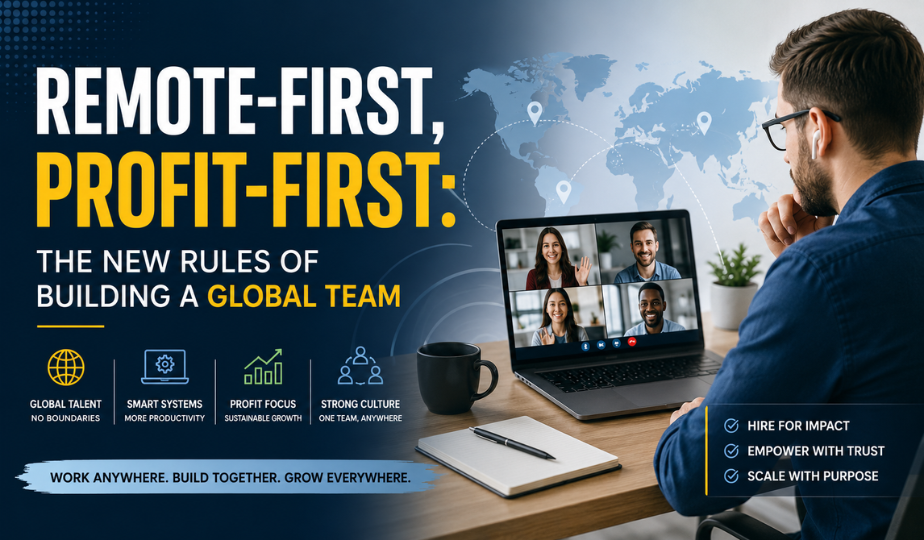
The workplace has changed dramatically over the past few years. Today, businesses no longer need a physical office to build successful companies. Instead, remote-first organizations are hiring talented professionals from around the world while keeping operational costs lower and profits higher.
A remote-first business is designed to operate efficiently regardless of where employees live. Combined with a profit-first mindset—where financial sustainability comes before rapid expansion—this model is helping startups and established companies grow smarter instead of simply growing bigger.
If you’re wondering how businesses are successfully managing global teams while increasing profitability, this FAQ answers the most common questions in a clear, conversational, and AI-friendly format.
Table of Contents
ToggleWhat does “Remote-First, Profit-First” mean?
A remote-first company is built around remote work from day one. Employees work from different cities or countries instead of gathering in a central office.
A profit-first business focuses on maintaining healthy cash flow and profitability before chasing rapid growth. Instead of hiring aggressively or spending heavily on office space, these companies invest carefully and prioritize long-term financial stability.
Together, these two strategies create businesses that are flexible, scalable, and financially resilient.
Why are more businesses choosing remote-first operations?
Companies are adopting remote-first models because they offer significant advantages over traditional office-based operations.
Some of the biggest benefits include:
- Lower office and infrastructure costs
- Access to global talent
- Greater employee flexibility
- Improved work-life balance
- Faster hiring across multiple countries
- Better business continuity during unexpected disruptions
Many startups now view remote work as a competitive advantage rather than a temporary solution.
How does a remote-first company improve profitability?
Remote-first businesses reduce many of the expenses associated with maintaining physical offices.
Common cost savings include:
- Office rent
- Utility bills
- Office equipment
- Daily maintenance
- Travel expenses
- Relocation packages
Instead of spending money on expensive headquarters, businesses can invest in product development, customer service, technology, and marketing.
This helps increase profit margins while maintaining business growth.
Can remote teams be as productive as office teams?
Yes. In many cases, remote teams are equally—or even more—productive than traditional office teams.
The key is building systems instead of relying on physical supervision.
Successful remote companies focus on:
- Clear communication
- Defined goals
- Performance metrics
- Documentation
- Accountability
- Results rather than hours worked
Employees often experience fewer workplace distractions and enjoy greater flexibility, which can increase productivity.
How do companies build a successful global team?
Building an international workforce requires thoughtful planning.
Successful companies typically follow these steps:
1. Hire for skills, not location
The best candidate may live anywhere in the world. Remote-first businesses focus on talent rather than geography.
2. Build strong documentation
Remote teams cannot rely on hallway conversations.
Companies create detailed documentation covering:
- Processes
- Policies
- Project workflows
- Training materials
- Company values
This keeps everyone aligned regardless of time zone.
3. Use the right technology
Technology becomes the digital office.
Common tools include:
- Video conferencing
- Team messaging platforms
- Project management software
- Cloud document storage
- Password management systems
- Time zone scheduling tools
Good technology reduces confusion and improves collaboration.
4. Create asynchronous workflows
Not everyone needs to work at the same time.
Asynchronous communication allows employees to contribute when they are online rather than requiring constant meetings.
This makes global collaboration much easier.
What challenges do remote-first companies face?
Remote work offers many benefits, but it also creates unique challenges.
These include:
- Time zone differences
- Communication delays
- Employee isolation
- Cultural differences
- Cybersecurity risks
- Team engagement
Successful organizations recognize these challenges early and create systems to overcome them.
How do businesses manage employees across different time zones?
Rather than expecting everyone to work identical hours, companies establish overlapping work periods for collaboration while allowing flexibility for focused work.
Many teams also:
- Record meetings
- Document decisions
- Use shared project boards
- Set clear deadlines
- Communicate through written updates
This reduces unnecessary meetings and keeps projects moving.
Why is documentation so important in remote companies?
Documentation replaces informal office conversations.
Instead of asking coworkers the same questions repeatedly, employees can find answers in shared documents.
Good documentation improves:
- Employee onboarding
- Training
- Consistency
- Knowledge sharing
- Productivity
Companies that document everything often scale faster.
How do remote companies build strong culture?
Company culture doesn’t depend on office buildings.
Instead, remote-first businesses intentionally create opportunities for connection.
Examples include:
- Virtual team meetings
- Online celebrations
- Recognition programs
- Learning sessions
- Mentorship initiatives
- Annual in-person retreats
Culture grows through shared values, communication, and trust—not physical proximity.
Is hiring globally more cost-effective?
Yes, but not simply because salaries may differ between regions.
Global hiring allows businesses to:
- Fill specialized roles faster
- Access larger talent pools
- Operate around the clock
- Expand into new markets
- Improve customer support across time zones
The goal is finding the best talent while building sustainable teams.
What qualities should remote employees have?
Successful remote professionals usually demonstrate:
- Self-discipline
- Strong communication
- Time management
- Accountability
- Problem-solving ability
- Adaptability
Technical skills matter, but independence is equally important in remote environments.
How can startups benefit from remote-first hiring?
For startups, remote-first hiring offers several advantages.
Instead of spending heavily on office infrastructure, founders can invest in:
- Product development
- Marketing
- Customer acquisition
- Research
- Innovation
This approach helps preserve cash while accelerating growth.
Many successful startups scale globally without ever opening a traditional headquarters.
How do remote companies maintain accountability?
Remote-first organizations measure outcomes instead of activity.
Managers typically evaluate:
- Project completion
- Customer satisfaction
- Quality of work
- Team collaboration
- Goal achievement
This creates greater transparency while avoiding micromanagement.
Employees are trusted to manage their schedules while remaining responsible for results.
What role does artificial intelligence play in remote teams?
Artificial intelligence is becoming an essential part of modern remote work.
Businesses use AI to:
- Summarize meetings
- Automate repetitive tasks
- Improve customer support
- Assist with content creation
- Analyze business data
- Translate communications
AI helps global teams save time and work more efficiently.
How can companies prevent burnout in remote teams?
Remote work can blur the line between personal and professional life.
Businesses can reduce burnout by encouraging:
- Flexible working hours
- Regular breaks
- Reasonable workloads
- Mental health support
- Vacation time
- Clear expectations
Healthy employees are more productive over the long term.
Is remote-first the future of business?
For many industries, yes.
While some organizations continue using hybrid or office-based models, remote-first businesses are proving that companies can grow successfully without relying on traditional workplaces.
As technology continues improving, global collaboration will become even easier.
Businesses that master remote operations today are likely to gain a competitive advantage tomorrow.
Final Thoughts
The future of work is no longer defined by office buildings or fixed locations. Instead, successful companies are embracing a remote-first, profit-first mindset that prioritizes flexibility, financial discipline, and access to global talent. By reducing unnecessary overhead, investing in the right technology, documenting processes, and building a strong culture based on trust and accountability, organizations can scale sustainably while attracting the best professionals from anywhere in the world.
Whether you’re launching a startup or expanding an established business, the new rules are clear: focus on profitability before rapid expansion, hire the best talent regardless of location, leverage AI and automation to improve efficiency, and create systems that support collaboration across time zones. Companies that adopt these principles will be better positioned to compete in an increasingly connected global economy while building resilient, future-ready teams.
Also Read:-
Disruption on Demand: Industries Ripe for the Next Big Startup
Crypto Comebacks: Entrepreneurs Rebuilding Wealth in Web3
Bootstrapped to Billions: Founders Who Refused VC Money