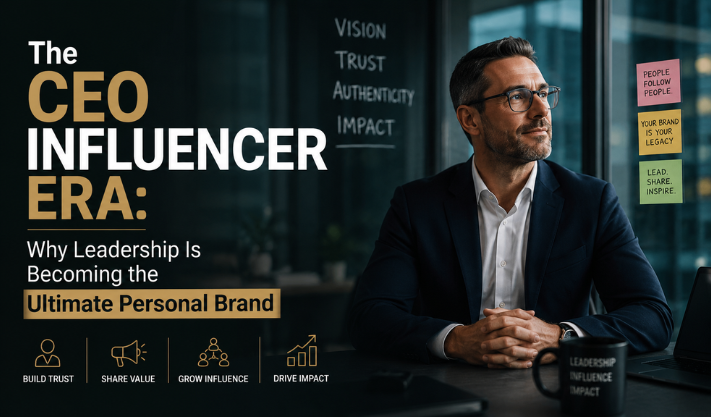
What Is the CEO Influencer Era?
The CEO influencer era is the growing trend of business leaders becoming public-facing personalities who actively build personal brands alongside their companies. Instead of communicating only through corporate announcements, CEOs increasingly share their ideas, experiences, values, and opinions through social media, podcasts, interviews, newsletters, and industry events.
Today, people often want to know not only what a company does, but who is leading it and what that leader believes. This shift is turning executive visibility into an important part of modern business strategy.
Why Is Personal Branding Becoming Important for CEOs?
A strong personal brand can help a CEO build trust, credibility, and recognition beyond the company itself.
Customers, employees, investors, and potential business partners increasingly connect with people rather than corporate logos. When a CEO communicates consistently and authentically, audiences can better understand the company’s mission and culture.
A recognizable leadership voice can also make a company more memorable. In competitive markets, the personality and perspective of a CEO can become a meaningful differentiator.
How Has Social Media Changed CEO Leadership?
Social media has dramatically reduced the distance between executives and their audiences.
Platforms such as LinkedIn, YouTube, Instagram, X, and podcasts allow CEOs to communicate directly with millions of people without relying entirely on traditional media.
A CEO can now comment on industry trends, discuss business lessons, celebrate employees, explain company decisions, or share personal experiences in real time.
This direct communication creates opportunities for leaders to become trusted voices within their industries.
What Makes a CEO Personal Brand Successful?
An effective CEO personal brand is built around expertise, authenticity, consistency, and relevance.
A successful CEO does not simply post promotional content. Instead, they provide useful perspectives and communicate ideas that audiences genuinely want to hear.
For example, a technology CEO might discuss artificial intelligence trends, leadership lessons, product innovation, or the future of work. A finance executive could share insights about economic changes, entrepreneurship, and investment behavior.
The strongest personal brands usually answer one simple question:
What unique perspective does this leader bring to the conversation?
Can a CEO’s Personal Brand Strengthen a Company’s Brand?
Yes. A CEO’s reputation can significantly influence how people perceive the organization they lead.
When a CEO consistently communicates the company’s values and vision, their personal brand can reinforce corporate identity. Their interviews, speeches, articles, and social media posts can help audiences understand the organization’s purpose in a more human way.
However, personal branding should complement—not replace—the company’s brand. The most effective approach connects the leader’s expertise with the organization’s broader mission.
Why Are CEOs Becoming Influencers?
The traditional definition of an influencer is changing.
Influence is no longer limited to entertainment, fashion, or lifestyle creators. Business leaders can also influence opinions, industry conversations, purchasing decisions, career choices, and investment interests.
A CEO with strong expertise and a trusted audience can become an influential voice without following the traditional influencer model.
This is particularly powerful in industries where credibility and knowledge matter. People may follow an executive because they want to understand where an industry is heading, not simply because they enjoy the person’s content.
What Role Does Authenticity Play in CEO Branding?
Authenticity is one of the most important elements of executive personal branding.
Audiences can quickly recognize when communication feels overly scripted or purely promotional. CEOs who share genuine lessons, challenges, opinions, and experiences often create stronger connections.
Authenticity does not mean sharing every detail of personal life. It means communicating in a clear, human, and believable voice.
A CEO can maintain professionalism while still showing personality.
How Does CEO Influence Affect Employees and Talent?
A visible CEO can also influence recruitment and employee engagement.
Potential employees increasingly research company leaders before accepting a position. A CEO who communicates a clear vision and demonstrates strong leadership values can make the organization more attractive to prospective talent.
Public leadership can also help employees feel connected to the company’s mission.
When workers see their CEO discussing innovation, culture, sustainability, customer experience, or professional development, they may better understand the direction of the organization.
Can CEO Personal Branding Help With Business Growth?
It can support business growth in several ways.
A strong CEO brand can increase visibility, create media opportunities, strengthen professional networks, and generate conversations around the company. It can also help establish authority within a particular industry.
For startups and growing businesses, an influential founder can sometimes provide an additional layer of credibility. People may discover the company through the founder’s content before they encounter its products or services.
Personal branding is therefore becoming part of the broader marketing and communications ecosystem.
What Are the Risks of Becoming a CEO Influencer?
CEO influence also comes with risks.
A highly visible executive must understand that public statements can affect the company’s reputation. A poorly considered post, controversial opinion, or inconsistent message can quickly attract unwanted attention.
There is also a risk of making the personal brand more important than the organization itself.
For this reason, CEOs should establish clear communication principles. They should know which subjects they can discuss publicly, maintain consistency with company values, and understand the potential consequences of their online presence.
How Can CEOs Build a Strong Personal Brand?
CEOs can begin with a simple strategy:
- Define a clear area of expertise.
Identify the topics where the CEO can provide genuine insight. - Choose the right platforms.
Focus on channels where the target audience already spends time. - Share valuable ideas.
Educational and experience-based content is usually more useful than constant promotion. - Maintain consistency.
Regular communication helps build recognition and trust. - Use multiple formats.
Articles, videos, interviews, podcasts, speeches, and social posts can reach different audiences. - Stay authentic.
A recognizable personal voice is more powerful than generic corporate messaging.
What Does the Future Hold for CEO Influencers?
The CEO influencer trend is likely to become an increasingly important part of modern leadership.
As audiences demand transparency and direct communication, executives will have more opportunities to become trusted voices in their industries. Artificial intelligence, digital media, podcasts, short-form video, and professional social networks will make executive communication even more accessible.
At the same time, expectations will rise. Audiences will expect CEOs to demonstrate knowledge, consistency, responsibility, and genuine leadership—not simply visibility.
Is CEO Personal Branding the Future of Leadership?
CEO personal branding is becoming more than a marketing tactic; it is becoming a leadership skill.
The modern CEO is increasingly expected to be a strategist, communicator, employer brand ambassador, industry expert, and public representative.
In the CEO influencer era, leadership does not end inside the boardroom. It extends into public conversations, digital communities, professional networks, and the broader culture surrounding a business.
The ultimate advantage is not simply having a large following. It is having earned influence—the ability to communicate ideas that people trust, remember, and act upon.
Also Read:-
Inside Boardrooms Where AI Is Reshaping Business Decisions
Second-Time Founders Who Built Billion-Dollar Businesses
Business Leaders Who Turned Failure Into Investment