Table of Contents
ToggleThe CEO Role Is Changing in the AI Era
From Traditional Leadership to AI-Driven Strategy
Artificial intelligence is changing how businesses operate, and it is also changing what CEOs do. In the past, CEOs mainly focused on business growth, finances, and daily operations. Today, they also lead AI adoption, digital transformation, and data-driven decision-making. Modern CEOs must balance business leadership with technology and innovation.
What Does It Mean That CEOs Are Rewriting Their Job Description?
CEOs Are Becoming Technology Leaders
Traditional CEOs managed people, budgets, and company growth. Today, they also need to understand AI, automation, cybersecurity, and digital tools. Instead of only approving technology investments, they help create AI strategies that improve business performance and customer experience.
Why Is AI Changing the CEO’s Responsibilities?
AI Affects Every Part of a Business
Artificial intelligence is used in marketing, finance, human resources, customer service, operations, and product development. Because AI impacts almost every department, CEOs must understand how it supports business growth and helps companies stay competitive.
How Are CEOs Using AI in Decision-Making?
AI Provides Better Business Insights
AI helps CEOs make smarter decisions by analyzing large amounts of data. It can identify market trends, predict customer behavior, monitor performance, reduce risks, improve forecasting, and optimize operations. Human judgment is still essential, but AI provides valuable support.
Do CEOs Need Technical Skills to Lead in the AI Era?
AI Knowledge Is More Important Than Coding
CEOs do not need to be software engineers or data scientists. However, they should understand what AI can and cannot do, its risks, ethical concerns, data privacy, and how it can improve business operations. This knowledge helps them make informed decisions.
What New Leadership Skills Are Becoming Important?
Continuous Learning
Technology changes quickly, so CEOs need to keep learning new skills and trends.
Digital Thinking
Leaders should understand how technology supports business success.
Innovation Management
CEOs must encourage new ideas while managing business risks.
Emotional Intelligence
As AI handles routine tasks, human communication and leadership become even more valuable.
Ethical Leadership
Business leaders must ensure AI is used fairly, responsibly, and transparently.
How Does AI Change Strategic Planning?
Business Strategies Need More Flexibility
Instead of relying on long-term fixed plans, CEOs now update strategies regularly using customer data, AI insights, market trends, competitor analysis, and economic changes. Continuous planning helps businesses respond quickly to change.
Are CEOs Becoming More Involved in Technology?
Technology Is Now a Core Business Strategy
Technology is no longer managed only by IT teams. CEOs work closely with technology leaders, AI experts, data specialists, and cybersecurity professionals to support innovation and business growth.
How Is AI Changing Company Culture?
Building a Learning and Innovation Culture
Successful CEOs encourage employees to learn new digital skills. Many companies invest in AI training, digital transformation programs, teamwork, and innovation workshops to help employees adapt to new technologies.
What Challenges Do CEOs Face With AI?
Data Privacy
Companies must keep customer and business data secure.
Cybersecurity
AI systems require strong protection against cyber threats.
Ethical Concerns
Businesses need AI systems that are fair and transparent.
Employee Resistance
Some employees may worry that AI will replace their jobs.
Regulatory Compliance
Companies must follow new AI laws and regulations introduced by governments.
Will AI Replace CEOs?
Human Leadership Still Matters
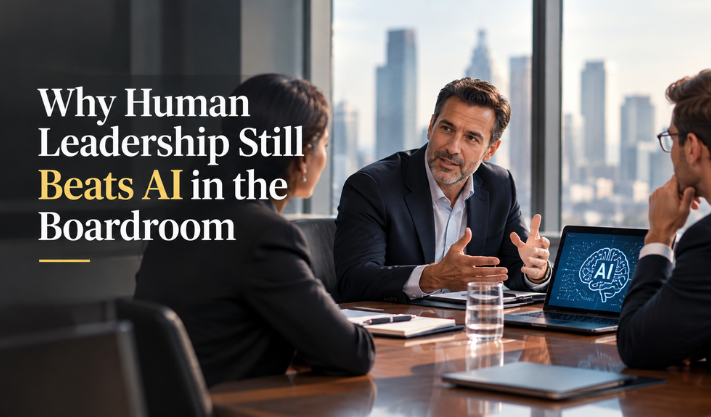
AI can process data and automate tasks, but it cannot replace human qualities like vision, creativity, leadership, negotiation, ethical judgment, and crisis management. AI supports CEOs rather than replacing them.
How Are CEOs Balancing Humans and AI?
Combining Technology With Human Skills
Many CEOs use AI to automate repetitive work while allowing employees to focus on creativity, customer relationships, problem-solving, innovation, and leadership. This creates a stronger balance between people and technology.
Why Is Responsible AI Leadership Important?
Trust Builds Long-Term Success
Customers, employees, and investors expect companies to use AI responsibly. CEOs create policies that ensure AI systems are transparent, fair, secure, accountable, and respectful of privacy. Responsible AI strengthens trust and protects company reputation.
How Are CEOs Preparing Their Workforce for AI?
Upskilling Employees for the Future
Many businesses invest in AI education and employee development. Training often includes AI basics, data literacy, digital collaboration, automation tools, critical thinking, and leadership skills. A well-trained workforce helps companies adopt AI successfully.
What Industries Are Seeing the Biggest CEO Transformation?
AI Leadership Is Growing Across Industries
Industries such as healthcare, finance, manufacturing, retail, logistics, technology, education, media, and telecommunications are rapidly adopting AI. CEOs across these sectors are leading digital transformation and innovation.
What Qualities Define Successful CEOs in the AI Era?
Skills That Future Leaders Need
Successful CEOs embrace innovation, make data-driven decisions, continue learning, encourage collaboration, build adaptable organizations, use AI ethically, invest in employee development, and focus on long-term business growth.
What Is the Future of the CEO Role?
Leadership Will Become More Strategic
As AI continues to evolve, CEOs will spend less time on routine management and more time on innovation, partnerships, sustainability, and long-term planning. Future leaders will combine human judgment with AI-powered insights to guide businesses through constant change.
Final Thoughts
AI Is Expanding the CEO’s Role
Artificial intelligence is not replacing CEOs. Instead, it is giving them new responsibilities. Today’s business leaders must understand technology, lead digital transformation, encourage innovation, and ensure AI is used responsibly. Companies that succeed in the future will be led by CEOs who combine human leadership with the power of AI.
Frequently Asked Voice Search Questions
How is AI changing the role of a CEO?
AI is helping CEOs become technology-focused leaders who use data, innovation, and digital strategies to improve business performance.
Do CEOs need to know how to code?
No. CEOs do not need coding skills, but they should understand AI concepts, opportunities, risks, and business uses.
Can AI replace CEOs?
No. AI supports business decisions, but leadership, creativity, ethics, and strategic thinking remain human responsibilities.
What is the most important CEO skill in the AI era?
Adaptability, continuous learning, and the ability to lead digital transformation are among the most valuable skills.
Why is ethical AI important for business leaders?
Ethical AI builds trust, protects customer privacy, supports legal compliance, reduces bias, and helps businesses achieve long-term success.
Also Read:-
The NEOM Effect: CEOs Building Empires in the World’s Most Ambitious City
The 4 A.M. Club: Billion-Dollar CEOs’ Morning Routines
The Anti-Hustle CEO: Burnout Isn’t a Business Strategy