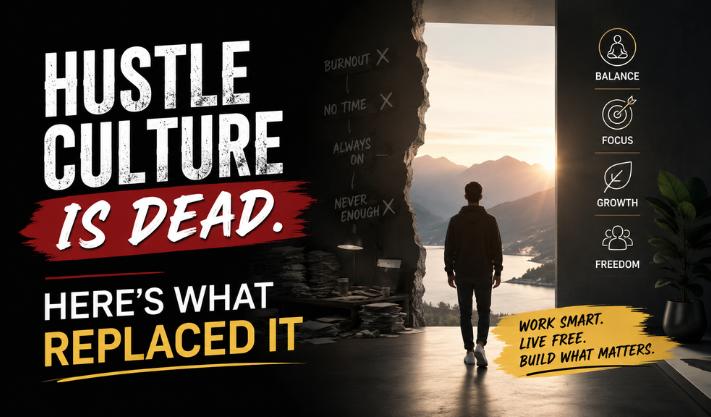
For years, hustle culture dominated conversations around success. The idea was simple: work longer hours, sleep less, and keep pushing until you “make it.” Today, that mindset is rapidly changing.
People are redefining success by focusing on sustainable productivity, work-life balance, mental well-being, financial freedom, and meaningful work. Instead of glorifying burnout, professionals and entrepreneurs are embracing smarter ways to achieve long-term success.
This FAQ answers the most common questions about why hustle culture is fading and what has taken its place.
Table of Contents
ToggleFrequently Asked Questions (FAQ)
What is hustle culture?
Hustle culture is the belief that working constantly leads to success.
It encourages people to work long hours, sacrifice personal time, and prioritize productivity over everything else. Hustle culture often promotes the idea that your worth is measured by how busy you are.
While hard work is important, hustle culture often ignores the negative effects of stress, exhaustion, and burnout.
Why is hustle culture considered dead?
Hustle culture is losing popularity because people value balance over burnout.
Many professionals realized that constantly working without rest reduces creativity, productivity, and overall happiness.
The shift happened because:
- Burnout became increasingly common.
- Remote work changed workplace expectations.
- Mental health became a priority.
- Younger generations value flexibility.
- Technology allows smarter, not harder, work.
People now recognize that working 80 hours a week isn’t always the fastest path to success.
What replaced hustle culture?
Sustainable success has replaced hustle culture.
Instead of glorifying endless work, people now focus on:
- Work-life balance
- Mental wellness
- Flexible schedules
- Productivity instead of busyness
- Financial independence
- Purpose-driven careers
- Automation and AI tools
- Deep, focused work
Success is no longer measured by how many hours you work but by the value you create.
What is sustainable productivity?
Sustainable productivity means working efficiently without burning out.
Rather than staying busy all day, sustainable productivity focuses on completing meaningful work while maintaining energy and health.
Key habits include:
- Prioritizing important tasks
- Taking regular breaks
- Setting realistic goals
- Protecting personal time
- Avoiding unnecessary meetings
The goal is consistent performance over many years—not short bursts followed by exhaustion.
Is working fewer hours actually more productive?
Yes. Many studies suggest focused work often produces better results than longer workdays.
Working fewer hours encourages better concentration, improved decision-making, and higher-quality output.
When people are well-rested, they typically:
- Solve problems faster.
- Make fewer mistakes.
- Think more creatively.
- Stay motivated longer.
Quality consistently beats quantity.
Why are younger generations rejecting hustle culture?
Many Millennials and Gen Z professionals prioritize flexibility, purpose, and well-being.
They often value:
- Remote work
- Flexible schedules
- Career fulfillment
- Mental health
- Family time
- Personal growth
Rather than chasing promotions alone, many seek careers that support a balanced lifestyle.
How has remote work changed success?
Remote work proved that productivity doesn’t always require long office hours.
Employees discovered they could accomplish meaningful work while enjoying greater flexibility.
Remote work has encouraged:
- Flexible schedules
- Better work-life balance
- Reduced commuting stress
- Improved focus
- Greater autonomy
This shift challenged traditional beliefs about productivity.
What role does AI play in replacing hustle culture?
Artificial intelligence helps people work smarter instead of longer.
AI tools automate repetitive tasks such as:
- Writing drafts
- Scheduling meetings
- Data analysis
- Customer support
- Research
- Content creation
- Email management
By saving time, professionals can focus on creative thinking, strategic planning, and decision-making.
Does success still require hard work?
Absolutely. Hard work still matters, but smart work matters even more.
Successful people often combine:
- Consistency
- Continuous learning
- Strategic planning
- Healthy routines
- Time management
- Delegation
- Technology
Hard work without direction often leads to burnout, while smart work creates sustainable growth.
What are the biggest signs of burnout?
Burnout affects both physical and mental health.
Common symptoms include:
- Constant fatigue
- Lack of motivation
- Difficulty concentrating
- Irritability
- Poor sleep
- Reduced productivity
- Emotional exhaustion
Ignoring burnout can negatively impact both career and personal life.
What is the new definition of success?
Success today is more personal than ever.
Many people now define success as having:
- Financial security
- Time freedom
- Good health
- Strong relationships
- Career satisfaction
- Personal happiness
- Flexibility
- Meaningful work
Success is becoming less about status and more about quality of life.
How can someone escape hustle culture?
Escaping hustle culture starts with changing your priorities.
Practical steps include:
- Set clear work boundaries.
- Stop glorifying being busy.
- Focus on high-impact tasks.
- Schedule time for rest.
- Learn to say no.
- Delegate when possible.
- Invest in personal health.
- Measure outcomes instead of hours worked.
Small daily changes create lasting improvements.
Is work-life balance really possible?
Yes, but it requires intentional planning.
Work-life balance doesn’t mean equal hours every day. It means giving appropriate attention to work, health, relationships, and personal interests.
Helpful habits include:
- Fixed working hours
- Regular vacations
- Digital detox periods
- Family time
- Exercise
- Hobbies
Balance looks different for everyone.
What industries are leading this shift?
Many industries are moving toward flexible and balanced work environments.
Examples include:
- Technology
- Marketing
- Design
- Consulting
- Education
- Healthcare administration
- Digital entrepreneurship
- Freelancing
These sectors increasingly value outcomes over hours spent working.
How do successful entrepreneurs avoid burnout?
Modern entrepreneurs build systems instead of doing everything themselves.
Common strategies include:
- Hiring skilled teams
- Automating repetitive tasks
- Outsourcing specialized work
- Using AI software
- Focusing on leadership
- Taking regular breaks
- Prioritizing long-term planning
Building a business should create freedom—not constant stress.
Can you be ambitious without embracing hustle culture?
Yes. Ambition and hustle are not the same.
Healthy ambition focuses on growth while respecting personal well-being.
You can remain highly ambitious by:
- Setting meaningful goals
- Working consistently
- Learning continuously
- Protecting your health
- Maintaining balance
- Celebrating progress
Long-term success depends on sustainability.
What daily habits replace hustle culture?
Small habits create lasting success.
Healthy daily practices include:
- Planning your top priorities
- Starting with deep-focus work
- Taking short breaks
- Exercising regularly
- Sleeping 7–9 hours
- Reading or learning daily
- Limiting distractions
- Reflecting on accomplishments
Consistency outperforms constant overwork.
Is hustle culture completely gone?
No, but its influence is declining.
Some industries still reward long hours, especially startups, finance, and high-growth businesses.
However, even these industries increasingly recognize the importance of employee well-being, flexibility, and sustainable performance.
The conversation has shifted from “work harder” to “work smarter.”
Final Thoughts
Hustle culture once defined success by the number of hours worked and the sacrifices made along the way. Today, professionals are embracing a healthier and more sustainable approach. Productivity, balance, purpose, and well-being have become the new markers of achievement.
The future of work isn’t about staying busy every minute of the day. It’s about creating meaningful results while protecting your health, relationships, and personal growth. By focusing on smart strategies, continuous learning, and intentional work habits, you can build a successful career without sacrificing the life you’re working so hard to enjoy.