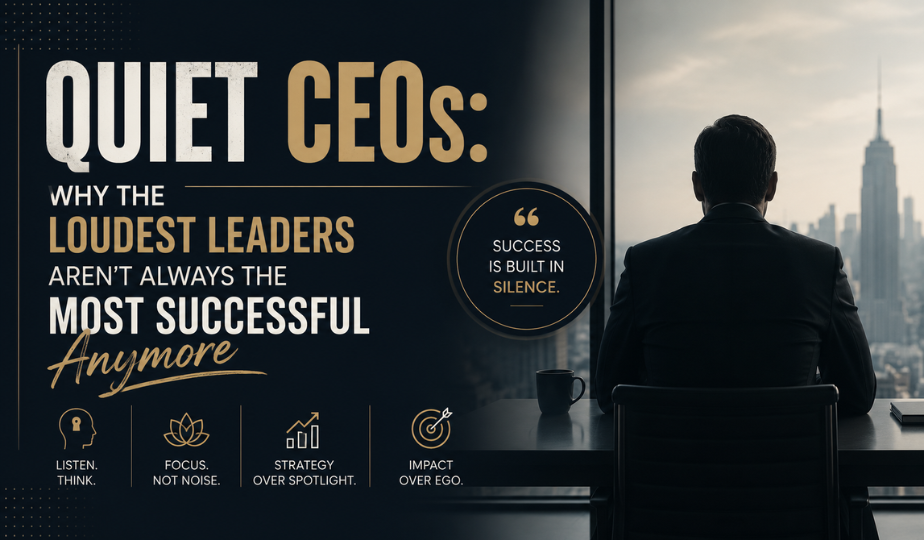
In today’s fast-moving business world, leadership is changing. For years, many people believed that the best CEOs were the ones who dominated headlines, gave powerful speeches, and constantly stayed in the public eye. However, the modern business landscape tells a different story. Many of today’s most successful leaders are quiet, thoughtful, and focused on execution rather than attention.
Quiet CEOs are proving that effective leadership isn’t measured by how loudly someone speaks—it is measured by results, trust, innovation, and long-term growth. Instead of chasing publicity, these leaders invest their energy in building strong teams, improving customer experiences, and creating sustainable businesses.
This FAQ-style guide explains why quiet leadership is becoming one of the most respected leadership styles in 2026.
What Is a Quiet CEO?
A quiet CEO is a leader who prefers thoughtful decision-making over constant public attention. They communicate with purpose, listen carefully, empower their teams, and focus on delivering consistent business results instead of building a personal brand.
Quiet CEOs are not shy or inactive. Instead, they choose influence over publicity and action over unnecessary conversation.
Common Characteristics of Quiet CEOs
- Excellent listeners
- Calm under pressure
- Data-driven decision makers
- Humble and approachable
- Strong team builders
- Long-term strategic thinkers
- Focused on business performance rather than personal recognition
Why Are Quiet CEOs Becoming More Successful?
Business success today depends more on execution than visibility.
Companies face rapid technological changes, economic uncertainty, global competition, and evolving customer expectations. In this environment, CEOs who remain calm, analytical, and focused often make better decisions than leaders driven by media attention.
Quiet leaders spend more time solving business problems and less time managing their public image.
Their leadership creates stability, which employees, investors, and customers increasingly value.
Do Quiet CEOs Make Better Decisions?
Often, yes.
Quiet CEOs usually gather information before making decisions. Rather than reacting quickly to every trend or headline, they evaluate risks, consult experts, and consider long-term consequences.
This thoughtful approach helps reduce costly mistakes.
Good leadership isn’t about making the fastest decision—it’s about making the right decision.
Why Is Listening an Important Leadership Skill?
Listening is one of the most underrated business skills.
Quiet CEOs encourage employees to share ideas, feedback, and concerns. This creates an environment where innovation can grow naturally.
When leaders truly listen, they understand:
- Customer needs
- Employee challenges
- Market changes
- Operational problems
- New business opportunities
Organizations where employees feel heard often experience stronger collaboration and higher engagement.
Are Loud Leaders Less Effective?
Not necessarily.
Being confident, charismatic, and visible can be valuable leadership qualities. The issue arises when visibility becomes more important than business performance.
Some highly public CEOs successfully inspire customers and investors. Others become distracted by maintaining a public image instead of focusing on the company’s core mission.
Leadership effectiveness depends on balance—not personality type.
How Do Quiet CEOs Build Strong Company Cultures?
Quiet leaders often lead through actions instead of speeches.
They create cultures based on:
- Trust
- Respect
- Accountability
- Transparency
- Collaboration
- Continuous learning
Employees are more likely to stay motivated when they see leaders consistently demonstrating these values.
A strong workplace culture is built through daily behavior, not motivational presentations.
Why Do Employees Respect Quiet Leaders?
Employees generally appreciate leaders who remain calm, fair, and approachable.
Quiet CEOs often:
- Give credit to their teams
- Avoid unnecessary conflict
- Stay emotionally balanced
- Focus on solving problems
- Support employee development
This leadership style creates psychological safety, allowing employees to contribute ideas without fear of criticism.
When people trust leadership, productivity naturally improves.
Can Introverts Become Great CEOs?
Absolutely.
Leadership is not determined by extroversion.
Many successful CEOs identify as introverts because they excel at preparation, listening, strategic thinking, and thoughtful communication.
Introverted leaders often build strong relationships through consistency rather than charisma.
Their influence comes from credibility instead of attention.
How Do Quiet CEOs Handle Business Crises?
During uncertain times, calm leadership becomes a competitive advantage.
Quiet CEOs typically respond by:
- Collecting accurate information
- Consulting experienced advisors
- Communicating honestly
- Prioritizing employee and customer needs
- Creating structured recovery plans
Instead of creating panic, they provide clarity.
This steady approach helps organizations remain resilient during difficult periods.
Why Is Humility Becoming a Leadership Strength?
Modern leadership values authenticity more than ego.
Humble CEOs recognize that great companies are built by teams, not individuals.
They willingly admit mistakes, learn from failures, and remain open to new ideas.
Humility also encourages continuous improvement because leaders never assume they know everything.
This mindset supports innovation and stronger decision-making.
How Does Quiet Leadership Improve Innovation?
Innovation depends on open communication.
Quiet CEOs often encourage employees at every level to contribute ideas.
Instead of dominating discussions, they ask thoughtful questions and create space for collaboration.
This inclusive environment often produces:
- Better products
- Faster problem-solving
- Improved customer experiences
- Greater employee engagement
- Sustainable innovation
The best ideas frequently come from teams that feel empowered.
Is Personal Branding Still Important for CEOs?
Yes—but it should support the business rather than overshadow it.
Today’s audiences appreciate leaders who communicate authentically and provide genuine value.
Quiet CEOs can still maintain professional visibility through interviews, thought leadership, company updates, and industry events without constantly seeking attention.
Credibility matters more than celebrity.
What Can Future Leaders Learn From Quiet CEOs?
Future business leaders can adopt several valuable habits:
- Listen before speaking.
- Make decisions based on facts.
- Build trust through consistency.
- Empower talented employees.
- Stay focused on long-term goals.
- Communicate honestly.
- Continue learning throughout your career.
These habits create stronger organizations and more resilient leadership.
Are Quiet CEOs the Future of Business Leadership?
Many leadership experts believe quiet leadership will continue gaining influence.
As businesses become more complex, organizations increasingly value leaders who remain calm, collaborative, and strategic.
Customers also prefer companies led by authentic individuals who prioritize people alongside profits.
Success today is measured less by how much attention a CEO receives and more by how effectively they create lasting value.
Frequently Asked Questions (Quick Answers)
Who is a quiet CEO?
A quiet CEO is a business leader who prioritizes thoughtful decision-making, listening, collaboration, and long-term business growth over constant public attention.
Are quiet CEOs successful?
Yes. Many highly successful CEOs lead with humility, strategic thinking, and consistent execution rather than media visibility.
Is being an introvert an advantage for CEOs?
It can be. Introverted leaders often excel in listening, planning, relationship building, and thoughtful decision-making.
Why is quiet leadership becoming popular?
Businesses increasingly value trust, stability, collaboration, and sustainable growth, making calm and thoughtful leadership more effective.
What is the biggest strength of a quiet CEO?
Their ability to make informed decisions, build strong teams, and focus on long-term success instead of short-term publicity.
Conclusion
The image of the loud, always-visible CEO is no longer the only model for business success. In today’s competitive and rapidly changing economy, quiet CEOs are demonstrating that exceptional leadership is built on trust, careful thinking, empathy, and consistent execution.
While charismatic leaders will always have a place in business, lasting success increasingly belongs to those who listen carefully, empower their teams, and remain committed to meaningful results. In 2026 and beyond, the most influential leaders may not be the loudest voices in the room—they may simply be the ones making the smartest decisions.
Also Read:-
The CEO Who Almost Wasn’t: Founders Who Nearly Quit Before Their Big Break
Remote-First, Profit-First: Building a Global Team Successfully
Disruption on Demand: Industries Ripe for the Next Big Startup