Introduction
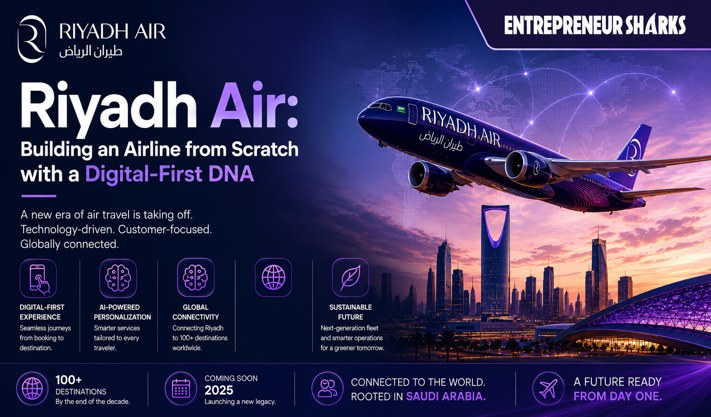
The global aviation industry is entering a new era where technology, personalization, and digital innovation are becoming just as important as aircraft fleets and airport infrastructure. In the middle of this transformation, Riyadh Air is emerging as one of the most ambitious airline projects in modern aviation history. Unlike traditional carriers that evolved gradually over decades, Riyadh Air is being built entirely from scratch with a digital-first mindset at its core. The airline represents a bold vision to redefine the passenger experience while supporting Saudi Arabia’s broader economic transformation goals under Saudi Vision 2030.
From cloud-based operations to AI-powered customer experiences, Riyadh Air aims to become more than just another airline. It seeks to position itself as a global technology-driven travel brand that connects the world to the Kingdom of Saudi Arabia while creating a seamless and highly personalized flying experience. Starting fresh has allowed the airline to avoid the burden of outdated legacy systems that many traditional airlines still struggle with today.
The Vision Behind Riyadh Air
Riyadh Air was officially launched as part of Saudi Arabia’s strategy to diversify its economy beyond oil and strengthen tourism, trade, and global connectivity. The airline is backed by Saudi Arabia’s Public Investment Fund and is expected to play a major role in transforming Riyadh into a global aviation hub.
The airline’s ambitions are massive. Riyadh Air plans to connect the Saudi capital to more than 100 destinations around the world by the end of the decade. However, what truly separates the airline from competitors is not only its scale but its approach. Instead of focusing solely on traditional aviation growth, Riyadh Air is building its identity around digital transformation, customer-centric design, and smart technology integration.
The airline recognizes that modern travelers expect more than transportation. Today’s passengers want speed, convenience, personalization, and connected digital experiences from the moment they book a ticket until they arrive at their destination. Riyadh Air’s entire strategy revolves around meeting these expectations from day one.
A Digital-First Airline Model
Most airlines operate with decades-old infrastructure and fragmented systems that often create inefficiencies and customer frustrations. Riyadh Air, however, has the advantage of starting with a clean slate. This allows the company to adopt modern cloud technologies, AI tools, and advanced digital platforms without needing to replace outdated legacy systems.
The airline is designing its operations around fully integrated digital ecosystems. This means booking systems, customer service, loyalty programs, flight operations, and onboard services can all communicate seamlessly in real time. Such integration helps improve operational efficiency while also delivering smoother experiences for passengers.
Riyadh Air is expected to heavily rely on artificial intelligence and data analytics to personalize travel experiences. Instead of offering generic services to all passengers, the airline can use customer preferences and travel behavior to create tailored recommendations, customized offers, and personalized entertainment experiences.
For example, a traveler who frequently books business-class flights may receive AI-generated upgrade offers, preferred seating suggestions, or customized dining options before boarding. This level of personalization is becoming increasingly important in the aviation industry as airlines compete for customer loyalty.
Redefining Customer Experience
One of Riyadh Air’s primary goals is to remove friction from air travel. Many travelers still experience long check-in lines, complicated booking systems, delayed customer support, and inconsistent digital experiences with traditional airlines. Riyadh Air wants to solve these problems through automation and smart technology.
The airline is expected to prioritize mobile-first experiences, allowing passengers to manage nearly every aspect of their journey from a smartphone. Digital boarding passes, biometric identification, AI-powered travel assistants, and automated baggage tracking could become standard features.
Customer service is also evolving through digital innovation. Instead of relying entirely on traditional call centers, Riyadh Air is likely to integrate intelligent virtual assistants and AI chat systems capable of handling common customer requests instantly. This not only improves response times but also creates a more efficient support experience.
In-flight technology will also play a major role. Riyadh Air aims to deliver high-speed connectivity, personalized entertainment systems, and digitally enhanced cabin experiences that align with the expectations of modern travelers. As remote work and global mobility continue to rise, passengers increasingly value uninterrupted connectivity during flights.
Sustainability and Smart Operations
Modern airlines are under growing pressure to reduce emissions and improve environmental sustainability. Riyadh Air has the opportunity to embed sustainable practices into its business model from the beginning.
The airline is expected to operate one of the newest and most fuel-efficient fleets in the industry, reducing fuel consumption and operational emissions. New-generation aircraft offer better efficiency, lower maintenance costs, and improved passenger comfort compared to older fleets used by many airlines today.
Digital systems can also support sustainability goals by optimizing routes, reducing unnecessary fuel burn, improving aircraft maintenance scheduling, and minimizing operational waste. Smart analytics allow airlines to make data-driven decisions that improve both profitability and environmental performance.
Sustainability is no longer simply a branding exercise in aviation. Travelers, governments, and global organizations increasingly expect airlines to demonstrate measurable environmental responsibility. Riyadh Air’s technology-driven approach may help position it as a more future-ready airline in this evolving landscape.
Competing on the Global Stage
Entering the highly competitive airline industry is never easy, especially when established global carriers already dominate international routes. Riyadh Air will compete against major players from the Middle East, Europe, Asia, and North America. However, its digital-first strategy could provide a significant competitive advantage.
Airlines like Emirates and Qatar Airways built their reputations through luxury service and global connectivity. Riyadh Air appears to be adding another layer to that formula by emphasizing digital intelligence and technology integration from the start.
Younger travelers, digital nomads, entrepreneurs, and tech-savvy passengers increasingly prefer brands that deliver smooth digital experiences alongside traditional comfort and reliability. Riyadh Air is positioning itself directly within this shift in consumer expectations.
The airline’s success could also strengthen Riyadh’s global standing as a major business and tourism destination. Improved connectivity encourages investment, tourism growth, international events, and economic expansion. Aviation often acts as a catalyst for wider economic development, and Riyadh Air is expected to play that role for Saudi Arabia.
The Future of Aviation Innovation
Riyadh Air represents a broader shift taking place across the aviation sector. Airlines are no longer just transportation companies. They are becoming technology-driven mobility platforms focused on data, personalization, automation, and connected ecosystems.
By building an airline entirely around digital infrastructure from the beginning, Riyadh Air has the opportunity to avoid many of the technological limitations that older airlines continue to face. This could allow faster innovation, better operational agility, and more responsive customer experiences.
The airline’s journey will be closely watched by the global aviation industry because it may become a blueprint for how future airlines are designed in the digital age. If successful, Riyadh Air could demonstrate that building with a technology-first philosophy is not only more efficient but also more aligned with the expectations of modern travelers.
Conclusion
Riyadh Air is not simply launching another airline; it is attempting to reshape what an airline can become in the digital era. With its technology-first strategy, AI-driven personalization, modern infrastructure, and ambitious global vision, the company is positioning itself as one of the most forward-thinking aviation brands in the world.
As aviation continues to evolve, Riyadh Air’s digital-first DNA may prove to be its greatest strength. By combining innovation, sustainability, connectivity, and customer-centric design, the airline has the potential to redefine modern air travel while helping transform Saudi Arabia into a major global aviation powerhouse.
Also Read:-
From Oil to Algorithm: UAE’s Clean Energy Startups
UAE’s PropTech Boom in Q1 2026
Fintech Kings of the Gulf