UAE Startups Led MENA Funding in Q1 2026
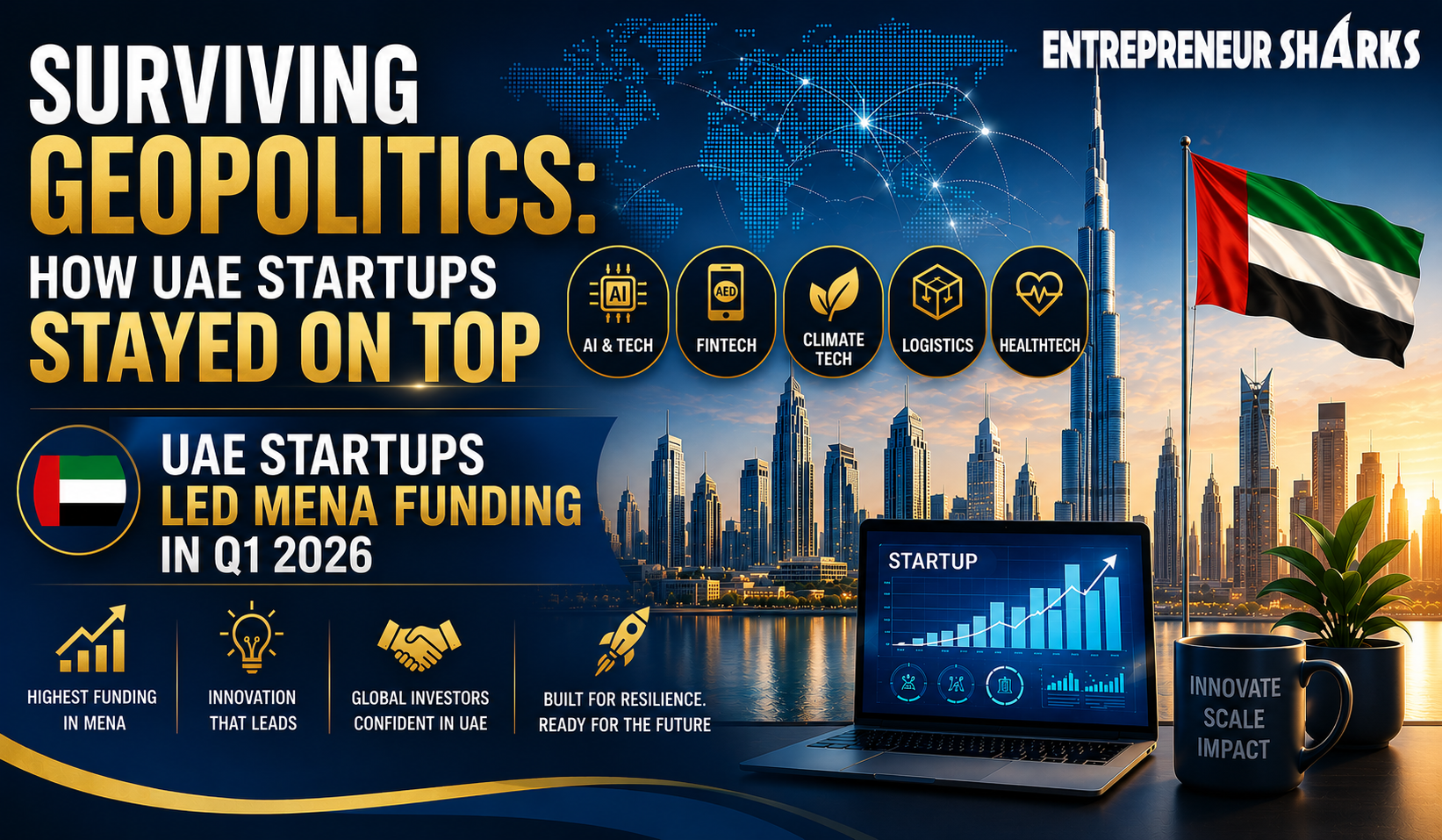
The startup ecosystem in the United Arab Emirates entered 2026 facing a difficult global environment. Rising geopolitical tensions, fluctuating oil prices, regional conflicts, higher borrowing costs, and slower global investment activity created uncertainty across international markets. Yet despite these challenges, UAE startups continued to dominate the Middle East and North Africa funding landscape in Q1 2026. Investors remained confident in the UAE’s innovation economy, proving that the country has evolved into far more than a regional business hub. It has become one of the world’s most resilient startup ecosystems.
Throughout the first quarter of 2026, UAE-based startups secured the largest share of venture capital funding in the MENA region. Sectors such as fintech, artificial intelligence, logistics, healthtech, climate technology, and digital commerce attracted major investment rounds. The country’s ability to maintain startup momentum during geopolitical instability highlighted the strength of its economic diversification strategy and its long-term commitment to innovation.
Why UAE Startups Continued to Attract Investors
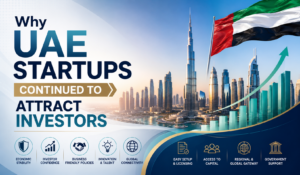
One of the biggest reasons UAE startups remained attractive was investor confidence in the country’s stability. While several global economies faced political uncertainty and inflationary pressure, the UAE continued to project regulatory consistency, economic openness, and strong government support for entrepreneurs. Investors often prioritize predictable markets during uncertain times, and the UAE positioned itself as a safe destination for capital.
Government-led initiatives also played a crucial role. Programs supporting startup licensing, golden visas, foreign ownership reforms, and AI-focused innovation policies encouraged both regional and international founders to establish operations in Dubai and Abu Dhabi. The UAE’s proactive approach toward digital transformation created an environment where startups could scale faster than in many neighboring countries.
Additionally, sovereign wealth funds and government-backed investment arms continued deploying capital into emerging sectors. This sustained liquidity helped startups survive a period when venture funding globally became more selective.
Fintech Dominated the Funding Landscape
Fintech remained the strongest sector in Q1 2026. UAE consumers and businesses increasingly adopted digital payments, embedded finance, cross-border remittance solutions, and decentralized financial technologies. Startups solving regional banking inefficiencies attracted substantial investor attention.
The UAE’s ambition to become a global financial technology center also accelerated growth. Regulatory sandboxes introduced by authorities in Dubai and Abu Dhabi allowed startups to test products more efficiently. This balance between innovation and regulation created trust among investors and consumers alike.
Several fintech startups expanded beyond the Gulf region into Africa, South Asia, and Southeast Asia, transforming UAE-based companies into international players. Investors saw this scalability as a major advantage compared to startups operating in smaller domestic markets.
Artificial Intelligence Became a National Priority

Artificial intelligence emerged as another key driver of startup growth. The UAE has spent years positioning itself as an AI-forward economy, and that strategy became increasingly visible in 2026. AI startups specializing in automation, cybersecurity, enterprise software, predictive analytics, healthcare diagnostics, and Arabic-language AI tools secured strong investor backing.
The rapid integration of AI across industries created opportunities for startups to solve both regional and global challenges. Businesses sought AI-powered solutions to reduce operational costs, improve efficiency, and navigate uncertain economic conditions. This demand strengthened the UAE’s technology ecosystem at a time when many global markets experienced slower startup growth.
The country’s investment in digital infrastructure, cloud services, and smart city initiatives also provided startups with a competitive advantage. Entrepreneurs had access to advanced ecosystems capable of supporting high-growth technology companies.
Geopolitical Challenges Created New Opportunities
Interestingly, geopolitical tensions themselves created opportunities for UAE startups. Businesses across the region began looking for supply chain alternatives, secure digital payment systems, and more localized technology providers. UAE startups responded quickly by offering regional solutions tailored to Middle Eastern markets.
Logistics and supply chain startups particularly benefited from changing trade routes and shifting commercial priorities. Companies using AI and automation to optimize delivery systems, warehouse operations, and regional shipping networks saw rising demand from enterprises attempting to manage uncertainty.
Cybersecurity startups also experienced rapid growth as governments and corporations increased spending on digital protection. With cyber threats becoming more sophisticated during periods of geopolitical instability, UAE-based cybersecurity firms became increasingly valuable to investors.
Dubai and Abu Dhabi Strengthened Their Positions
Dubai and Abu Dhabi continued competing to become the region’s leading innovation capital, and this competition benefited startups. Dubai remained the center for global entrepreneurship, attracting founders through its international connectivity, vibrant business culture, and strong venture capital presence.
Meanwhile, Abu Dhabi expanded its influence through state-backed investment programs, advanced technology partnerships, and large-scale innovation hubs. The emirate focused heavily on artificial intelligence, climate technology, and advanced manufacturing, attracting startups aligned with future economic priorities.
Together, both cities created a complementary ecosystem where startups could access funding, mentorship, infrastructure, and international markets.
International Investors Returned to the Region
Another important trend in Q1 2026 was the return of international investors to MENA markets through the UAE. Many foreign venture capital firms viewed the country as the gateway to the broader Middle East, Africa, and South Asia regions.
Global investors increasingly preferred backing startups with regional scalability rather than businesses dependent on single-country markets. UAE startups fit this strategy perfectly because many were already designed for cross-border expansion.
This international participation also improved startup valuations and increased competition among investors for high-potential deals. Founders with strong unit economics and scalable business models found themselves in a stronger negotiating position compared to previous years.
Climate Technology and Sustainability Gained Momentum
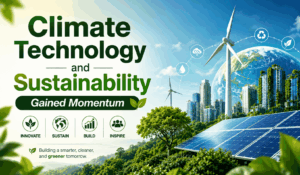
Sustainability-focused startups gained remarkable momentum in early 2026. The UAE’s commitment to clean energy and sustainable development encouraged investments into climate technology, renewable energy platforms, carbon reduction tools, water management systems, and sustainable mobility startups.
As global climate concerns intensified, investors began viewing climate technology not only as a sustainability initiative but also as a long-term commercial opportunity. UAE startups addressing environmental challenges attracted interest from both impact investors and traditional venture capital firms.
The country’s focus on balancing economic growth with sustainability created fertile ground for green innovation. This trend is expected to accelerate further in the coming years.
The Future of UAE’s Startup Ecosystem
The performance of UAE startups in Q1 2026 demonstrated that the ecosystem has matured significantly. Unlike earlier years when startup growth depended heavily on external market conditions, the UAE now possesses structural strengths capable of supporting long-term innovation.
Access to capital, progressive regulations, strong infrastructure, and international connectivity continue making the UAE one of the most attractive startup destinations globally. More importantly, founders in the region have become increasingly resilient, learning how to navigate uncertainty while building scalable businesses.
As geopolitical risks continue influencing global markets, the UAE’s startup ecosystem may actually strengthen further. Investors are increasingly prioritizing regions that combine stability with innovation potential, and the UAE currently offers both.
The country’s ability to maintain funding leadership during uncertain times reflects a broader transformation taking place across the Gulf economy. Startups are no longer viewed as experimental ventures; they are becoming central pillars of future economic growth.
For entrepreneurs across the MENA region, the UAE’s success story in Q1 2026 serves as proof that innovation can thrive even during periods of global instability. By combining visionary policies, technological ambition, and economic resilience, UAE startups managed not only to survive geopolitics — but to stay firmly on top.
Also Read:-
From Oil to Algorithm: UAE’s Clean Energy Startups
UAE’s PropTech Boom in Q1 2026
Fintech Kings of the Gulf