Table of Contents
ToggleArtificial Intelligence Becomes the UK’s Investment Magnet
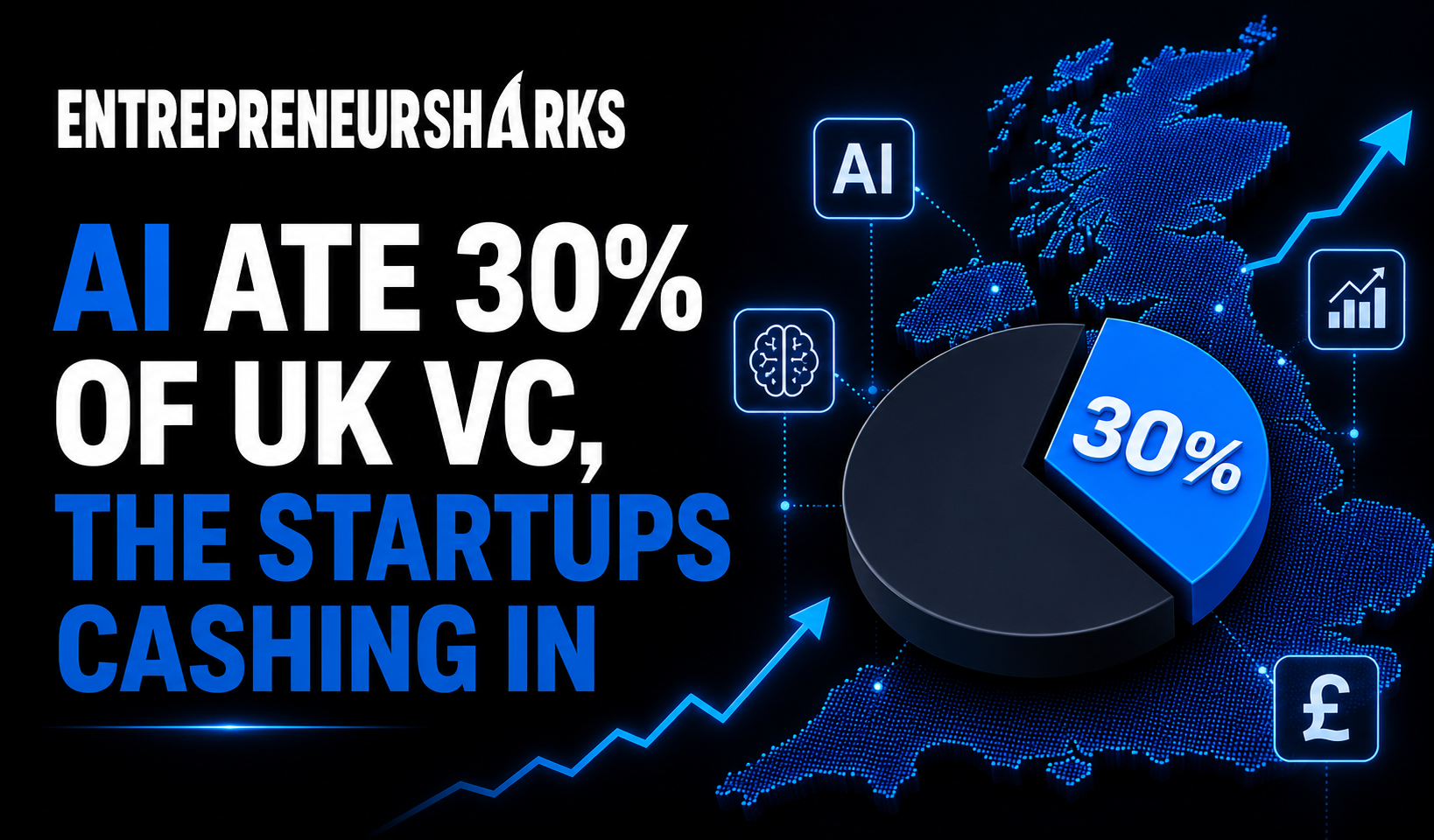
Artificial Intelligence is no longer a futuristic concept discussed only in research labs and technology conferences. It has become the driving force behind one of the biggest shifts in venture capital investment across the United Kingdom. In recent years, AI-focused startups have attracted nearly 30% of all UK venture capital funding, signaling a dramatic transformation in how investors evaluate innovation and growth opportunities. What was once a niche segment of the technology ecosystem has now become the centerpiece of startup investment strategies, with entrepreneurs and investors alike racing to capitalize on the AI revolution.
The surge in funding reflects a growing belief that AI will reshape every major industry. From healthcare and finance to logistics, manufacturing, education, retail, and cybersecurity, artificial intelligence is creating new business models, improving efficiency, and generating unprecedented opportunities for innovation. Investors see AI not merely as another technology trend but as a foundational shift comparable to the rise of the internet, cloud computing, and smartphones.
As a result, startups with strong AI capabilities are receiving larger funding rounds, achieving higher valuations, and attracting global attention. For many venture capital firms, missing out on the next breakthrough AI company represents a greater risk than investing aggressively in the sector.
Why Venture Capital Is Flowing Toward AI
The rapid adoption of AI technologies has created enormous excitement within investment circles. Venture capital firms are attracted to businesses that can scale quickly, disrupt established markets, and generate significant returns. AI startups fit this profile perfectly.
One major reason for the investment boom is the broad applicability of artificial intelligence. Unlike technologies designed for a specific industry, AI can be integrated into almost any business process. Companies are using AI to automate repetitive tasks, analyze massive datasets, improve customer experiences, enhance decision-making, and create entirely new products and services.
Another factor is the emergence of generative AI. The success of large language models and content-generation tools has demonstrated the commercial value of AI in ways that are easy for both businesses and consumers to understand. This has increased confidence among investors who may have previously viewed AI as overly technical or difficult to monetize.
The UK’s strong academic institutions, thriving startup ecosystem, and access to international markets have further strengthened its position as a leading hub for AI innovation. Investors recognize these advantages and are directing capital toward companies that can leverage them effectively.
Healthcare Startups Are Winning Big
Among the sectors benefiting most from AI investment is healthcare. UK startups are developing innovative solutions that improve diagnostics, accelerate drug discovery, optimize clinical workflows, and personalize treatment plans.
Traditionally, healthcare has struggled with inefficiencies, rising costs, and increasing patient demand. AI offers solutions to many of these challenges. Machine learning algorithms can analyze medical images with remarkable accuracy, helping doctors identify diseases earlier and make better-informed decisions.
In pharmaceutical research, AI is dramatically reducing the time required to identify potential drug candidates. What once took years can now be accomplished in months, creating enormous value for healthcare providers and patients alike.
Investors are particularly attracted to healthcare AI because it combines strong commercial potential with meaningful social impact. Companies operating in this space often address critical global challenges while simultaneously building scalable and profitable businesses.
Fintech’s AI Revolution
The United Kingdom has long been recognized as one of the world’s leading fintech hubs, and AI is accelerating innovation across the sector. Financial institutions generate vast amounts of data every day, making them ideal environments for artificial intelligence applications.
AI-powered fintech startups are helping banks and financial service providers detect fraud, manage risk, automate customer support, and deliver personalized financial recommendations. Machine learning systems can identify unusual transaction patterns in real time, significantly improving security and reducing losses.
At the same time, AI-driven platforms are making financial services more accessible and efficient. Automated investment advisors, intelligent lending systems, and predictive analytics tools are transforming how individuals and businesses manage their finances.
For investors, fintech AI startups represent a compelling opportunity because they address large markets with clear customer demand. As digital banking and financial technology continue to evolve, venture capital investment in this sector is expected to remain strong.
Generative AI Creates a New Startup Gold Rush
Perhaps no area has generated more excitement than generative AI. The ability of AI systems to create text, images, videos, software code, and marketing content has sparked a wave of entrepreneurial activity across the UK startup ecosystem.
Startups are building specialized generative AI platforms tailored to industries such as legal services, marketing, education, media, customer support, and software development. These tools help businesses increase productivity, reduce operational costs, and improve the quality of their outputs.
For example, companies can now generate marketing campaigns in minutes rather than days. Software developers can use AI-assisted coding tools to accelerate product development. Educational institutions can create personalized learning experiences for students at scale.
Investors view generative AI as one of the most significant technological opportunities of the decade. Startups that successfully establish themselves in this market have the potential to grow rapidly and dominate highly profitable niches.
Enterprise AI Is Quietly Becoming a Giant Market
While consumer-facing AI products often receive the most media attention, many of the largest investment opportunities exist within enterprise software. Businesses around the world are seeking AI solutions that improve productivity, automate operations, and reduce costs.
Enterprise AI startups are developing platforms that help organizations analyze data, manage supply chains, optimize workflows, and enhance customer experiences. These solutions often generate recurring subscription revenue, making them particularly attractive to investors.
Large corporations are increasingly prioritizing digital transformation initiatives, and AI has become a central component of those strategies. As businesses seek competitive advantages in rapidly changing markets, demand for enterprise AI solutions continues to grow.
Many venture capital firms believe that the biggest AI success stories of the next decade may come not from consumer applications but from enterprise technologies that quietly power critical business operations behind the scenes.
Challenges Beneath the Hype
Despite the excitement surrounding AI investment, the sector is not without risks. As more startups enter the market, competition is becoming increasingly intense. Simply incorporating AI into a product is no longer enough to attract investors or customers.
Many startups struggle to differentiate themselves from competitors offering similar solutions. Investors are becoming more selective, focusing on businesses with strong intellectual property, proven market demand, and sustainable business models.
Talent shortages also present significant challenges. Skilled AI engineers, researchers, and data scientists remain in high demand, driving up salaries and making recruitment difficult for early-stage companies.
Additionally, governments and regulators are paying closer attention to artificial intelligence. Issues such as data privacy, algorithmic bias, transparency, and accountability are becoming increasingly important. Startups must navigate these challenges carefully to maintain trust and comply with evolving regulations.
The Characteristics of Successful AI Startups
The startups attracting the most investment share several key traits. First, they focus on solving real-world problems rather than simply showcasing technological capabilities. Investors want to see clear evidence that customers are willing to pay for a solution.
Second, successful AI companies combine technical excellence with deep industry expertise. Understanding customer needs and market dynamics is often just as important as developing sophisticated algorithms.
Third, scalability remains a critical factor. Venture capital firms look for businesses capable of expanding rapidly across multiple markets and industries. Startups with flexible platforms, recurring revenue models, and strong customer retention rates are particularly appealing.
Finally, companies that prioritize ethical AI development and responsible innovation are increasingly gaining investor confidence. Trust and transparency are becoming important competitive advantages in the AI era.
The Future of AI Investment in the UK
The momentum behind AI investment shows little sign of slowing. Businesses across every sector are exploring ways to integrate artificial intelligence into their operations, creating a growing demand for innovative solutions.
The UK remains well-positioned to lead this transformation thanks to its world-class universities, vibrant startup ecosystem, access to global capital, and strong culture of innovation. Venture capital firms are expected to continue allocating significant portions of their portfolios to AI-focused companies.
While market conditions may fluctuate and some startups will inevitably fail, the broader trend is clear. Artificial intelligence has become one of the most influential forces shaping the future of entrepreneurship and investment. With nearly a third of UK venture capital funding already flowing into AI ventures, the startups cashing in today are not just benefiting from a trend—they are helping define the next chapter of the digital economy. As AI capabilities continue to expand, the companies leading this revolution may become the most valuable and transformative businesses of the coming decade.