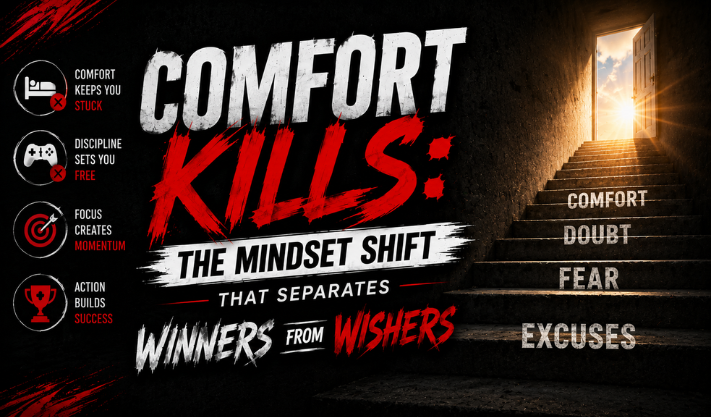
In today’s fast-changing world, talent alone is not enough. Many people dream about success, but only a few are willing to step outside their comfort zones to achieve it. The biggest difference between winners and wishers is not intelligence, luck, or resources—it’s mindset.
This guide answers the most common questions about why comfort can hold people back and how embracing discomfort creates growth, resilience, and long-term success.
What Does “Comfort Kills” Actually Mean?
“Comfort Kills” means that staying in situations that feel safe and easy can stop personal and professional growth. While comfort feels good in the short term, it often prevents people from taking risks, learning new skills, and pursuing bigger opportunities.
Comfort zones are not dangerous because they are bad. They become dangerous when they turn into permanent habits that limit progress.
Simply put:
- Comfort creates routine.
- Challenge creates growth.
- Growth creates success.
Why Do Successful People Avoid Staying Comfortable?
Successful people understand that growth happens when they face challenges. They know that every major achievement comes with uncertainty, failure, and learning.
Many entrepreneurs, athletes, and business leaders intentionally put themselves in uncomfortable situations because they know that difficult experiences build confidence and resilience.
They don’t wait until they feel ready.
They take action and become ready through experience.
What Is the Difference Between Winners and Wishers?
The difference is often found in daily habits rather than natural ability.
Winners
- Take action even when they feel uncertain.
- Learn from mistakes.
- Stay disciplined.
- Accept temporary discomfort.
- Focus on long-term goals.
Wishers
- Wait for the perfect moment.
- Fear failure.
- Stay inside familiar routines.
- Avoid difficult conversations and decisions.
- Prioritize short-term comfort.
The gap between wishing and winning is usually action.
Why Is the Comfort Zone So Attractive?
The human brain is naturally designed to seek safety and avoid risk. Familiar routines require less energy and create less stress.
Benefits of Comfort Zones
- Predictability
- Security
- Low anxiety
- Familiar outcomes
Drawbacks of Comfort Zones
- Limited growth
- Missed opportunities
- Reduced creativity
- Fear of change
The longer someone stays comfortable, the harder it often becomes to make bold decisions.
Can Comfort Stop Career Growth?
Yes. Remaining comfortable can slow career development.
Many professionals stay in jobs they no longer enjoy because they fear change. Others avoid asking for promotions, learning new technologies, or starting businesses because uncertainty feels risky.
Career Growth Often Requires
- Learning new skills
- Taking leadership roles
- Networking
- Accepting challenges
- Making difficult decisions
People who consistently choose growth over comfort often create more opportunities for themselves.
How Does Discomfort Build Confidence?
Confidence is not something people are born with. It is built through repeated action.
Every time someone faces a difficult challenge and survives it, their confidence increases.
Examples of Confidence-Building Challenges
- Speaking in public
- Starting a business
- Applying for a better job
- Learning a new skill
- Having difficult conversations
Action reduces fear. Experience builds belief.
Confidence is often the result of doing hard things repeatedly.
Why Do People Fear Leaving Their Comfort Zones?
Several common fears keep people from growing.
Fear of Failure
People worry they will make mistakes or lose money, time, or reputation.
Fear of Judgment
Many people avoid taking action because they care too much about what others think.
Fear of Uncertainty
The unknown feels uncomfortable because the outcome cannot be controlled.
Fear of Success
Some people worry that success will bring greater responsibility and expectations.
Understanding these fears is the first step toward overcoming them.
What Mindset Shift Separates Winners from Wishers?
The key mindset shift is moving from seeking comfort to seeking growth.
Instead of asking:
“What if I fail?”
Winners ask:
“What will I miss if I never try?”
This small change in thinking encourages action instead of hesitation.
Growth-focused people understand that setbacks are lessons, not permanent defeats.
Is Failure Necessary for Success?
In many cases, yes.
Failure teaches lessons that success often cannot.
People who achieve great results usually experience setbacks along the way. They learn what works, what doesn’t, and how to improve.
Lessons Failure Can Teach
- Patience
- Problem-solving skills
- Emotional resilience
- Adaptability
- Determination
The goal is not to avoid failure but to learn from it.
What Daily Habits Help People Escape Comfort?
Small daily actions create lasting transformation.
Set One Uncomfortable Goal Each Day
Do something that challenges you, even if it feels small.
Learn Continuously
Read books, take courses, and develop new skills.
Exercise Regularly
Physical challenges strengthen mental discipline.
Limit Excuses
Replace “I can’t” with “How can I?”
Track Progress
Celebrate effort, not just results.
Consistency matters more than perfection.
How Can Entrepreneurs Benefit from Embracing Discomfort?
Entrepreneurs constantly face uncertainty.
Building a business often requires:
- Taking calculated risks
- Solving unexpected problems
- Managing rejection
- Learning from mistakes
- Adapting to market changes
Business owners who become comfortable with uncertainty are often better prepared to grow and innovate.
The willingness to act despite fear is a valuable entrepreneurial skill.
Can Staying Comfortable Affect Personal Relationships?
Yes.
Healthy relationships often require honest communication, vulnerability, and difficult conversations.
Avoiding conflict may feel comfortable, but it can create long-term misunderstandings and resentment.
Relationship Growth Comes From
- Open communication
- Accountability
- Emotional honesty
- Mutual support
- Personal development
Choosing temporary discomfort can strengthen long-term connections.
How Can Someone Start Changing Their Mindset Today?
Start with one simple rule:
Do one thing every day that scares you a little.
This could mean:
- Introducing yourself to someone new
- Sharing an idea in a meeting
- Applying for a dream job
- Starting a side business
- Learning a difficult skill
Small acts of courage build momentum.
The goal is progress, not perfection.
What Are the Biggest Signs That Comfort Is Holding You Back?
You may be stuck in a comfort zone if:
- You avoid new opportunities.
- You keep postponing important goals.
- You fear making mistakes.
- Your daily routine never changes.
- You often say, “Maybe someday.”
Recognizing these patterns can help you break them.
What Is the Biggest Lesson About Success and Comfort?
The greatest achievements rarely happen inside a comfort zone.
Growth demands effort.
Leadership demands courage.
Success demands action.
People who win are not fearless. They simply refuse to let fear make their decisions.
Comfort offers safety, but growth offers possibility.
Final Thoughts
The phrase “Comfort Kills” is not about avoiding happiness or stability. It is about recognizing that long-term success requires continuous learning and the courage to face uncertainty.
The mindset shift that separates winners from wishers is simple:
Wishers wait. Winners act.
Every challenge faced today becomes the confidence needed for tomorrow.
If you want a different future, you must be willing to do what feels uncomfortable now. The life you want often exists just beyond the limits of your comfort zone.
Voice Search FAQs
Does Comfort Stop Success?
Yes. Staying too comfortable can prevent growth, learning, and new opportunities.
What Separates Winners from Wishers?
Winners take action despite fear, while wishers often wait for the perfect moment.
Why Is Leaving the Comfort Zone Important?
It helps build confidence, resilience, and valuable life skills.
How Can I Develop a Winner’s Mindset?
Focus on growth, embrace challenges, learn from failure, and take consistent action.
Is Discomfort Necessary for Personal Growth?
In most cases, yes. Growth usually happens when people face and overcome challenges.
Also Read:-
What Failure Taught This Founder That Harvard Never Could
The leadership Rule Every Great CEO Breaks on Purpose
Why Top CEOs Make Critical Decisions in Under 60 Seconds