Introduction
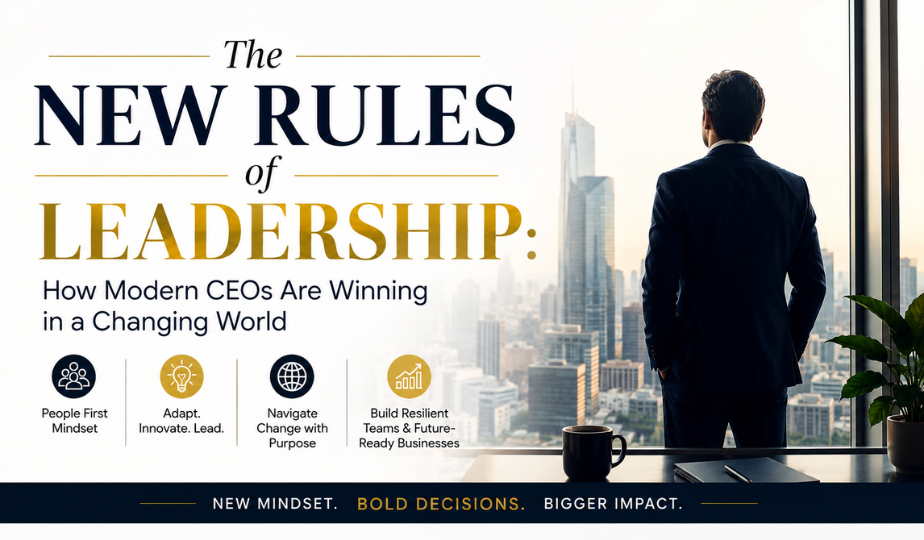
Leadership has changed dramatically over the past decade. Today’s CEOs are expected to do much more than increase profits. They must lead digital transformation, inspire diverse teams, embrace innovation, respond to global challenges, and build businesses that customers trust.
The modern business environment is fast-moving, technology-driven, and highly competitive. Successful leaders are no longer defined solely by experience or authority—they are measured by adaptability, emotional intelligence, and their ability to guide organizations through constant change.
What is modern leadership?
Modern leadership is the ability to guide people through change while encouraging innovation, collaboration, and long-term growth.
Unlike traditional leadership, which often relied on hierarchy and control, modern leaders empower employees, encourage new ideas, and create workplaces where people feel valued and motivated.
Today’s CEOs focus on:
- Innovation
- Employee well-being
- Customer experience
- Sustainability
- Digital transformation
- Continuous learning
Modern leadership is about influencing people—not simply managing them.
Why has leadership changed so much?
Leadership has evolved because the business world has changed.
Several factors have transformed the role of CEOs:
- Artificial intelligence and automation
- Remote and hybrid work
- Global competition
- Faster customer expectations
- Economic uncertainty
- Digital disruption
- Climate and sustainability concerns
Organizations now need leaders who can adapt quickly rather than simply maintain existing systems.
What are the new rules of leadership?
Today’s successful CEOs follow several important leadership principles.
1. Adaptability Comes First
Markets change quickly.
Modern CEOs regularly update strategies instead of sticking to outdated business models.
Being flexible has become one of the biggest competitive advantages.
2. People Matter More Than Processes
Employees drive innovation.
Great leaders invest in:
- Employee development
- Mental well-being
- Inclusive workplaces
- Professional growth
- Open communication
Happy employees often deliver better customer experiences.
3. Lead with Purpose
Customers increasingly support businesses that stand for something meaningful.
Modern CEOs build organizations around values like:
- Integrity
- Sustainability
- Diversity
- Social responsibility
- Customer trust
Purpose creates stronger brands.
4. Make Decisions Using Data
Modern leaders rely on information instead of assumptions.
Data helps CEOs understand:
- Customer behavior
- Sales performance
- Market trends
- Employee productivity
- Financial health
Data-driven decisions reduce business risk.
5. Continue Learning
Technology evolves rapidly.
Successful CEOs remain lifelong learners by reading industry reports, attending conferences, learning new technologies, and seeking advice from mentors.
Learning has become a leadership responsibility.
What leadership skills are most important today?
Today’s CEOs need a combination of technical knowledge and human skills.
The most valuable leadership skills include:
- Emotional intelligence
- Communication
- Strategic thinking
- Decision-making
- Problem-solving
- Digital literacy
- Adaptability
- Creativity
- Collaboration
- Resilience
These skills help leaders manage uncertainty while inspiring confidence.
Why is emotional intelligence important for CEOs?
Emotional intelligence helps leaders understand emotions, build relationships, and make thoughtful decisions.
CEOs with high emotional intelligence often:
- Listen carefully
- Handle conflict professionally
- Motivate employees
- Build trust
- Stay calm under pressure
Employees are more likely to follow leaders who genuinely understand their concerns.
How are successful CEOs using technology?
Technology has become a strategic business tool.
Modern CEOs use digital solutions to:
- Improve customer service
- Automate repetitive tasks
- Analyze business performance
- Strengthen cybersecurity
- Support remote teams
- Increase productivity
Technology supports better decisions, but human judgment remains essential.
What role does innovation play in leadership?
Innovation helps businesses remain competitive.
Modern leaders encourage employees to:
- Experiment with new ideas
- Learn from failures
- Improve existing products
- Solve customer problems creatively
Innovation is no longer limited to research departments—it is everyone’s responsibility.
How do modern CEOs build strong company cultures?
Company culture influences employee satisfaction, productivity, and business success.
Strong leaders build culture by:
- Communicating clearly
- Recognizing achievements
- Encouraging teamwork
- Supporting diversity
- Promoting transparency
- Providing growth opportunities
A healthy workplace attracts talented professionals and improves employee retention.
Why is transparency important in leadership?
Employees and customers expect honesty.
Transparent CEOs openly discuss:
- Company goals
- Challenges
- Performance
- Changes
- Future plans
Transparency builds trust and strengthens long-term relationships.
How does diversity improve leadership?
Diverse teams bring different experiences, perspectives, and ideas.
Modern CEOs encourage diversity because it can improve:
- Innovation
- Decision-making
- Customer understanding
- Employee engagement
- Global competitiveness
Inclusive organizations often adapt more effectively to changing markets.
How should CEOs manage uncertainty?
Business uncertainty is unavoidable.
Successful leaders respond by:
- Planning for multiple scenarios
- Staying informed
- Communicating regularly
- Remaining flexible
- Making timely decisions
- Encouraging collaboration
Calm leadership helps organizations remain confident during difficult periods.
What mistakes should modern leaders avoid?
Common leadership mistakes include:
- Resisting change
- Ignoring employee feedback
- Poor communication
- Micromanagement
- Making decisions without data
- Avoiding innovation
- Failing to develop future leaders
Recognizing these mistakes early helps businesses grow more effectively.
How do modern CEOs inspire employees?
Employees perform better when they understand the organization’s vision.
Great leaders inspire teams by:
- Setting clear goals
- Celebrating achievements
- Providing regular feedback
- Offering career development
- Leading by example
- Showing appreciation
Inspiration creates engagement, loyalty, and stronger performance.
What does the future of leadership look like?
Leadership will continue evolving as technology and global markets change.
Future CEOs will likely focus on:
- AI-assisted decision-making
- Sustainable business growth
- Personalized employee experiences
- Human-centered leadership
- Continuous innovation
- Ethical technology adoption
- Global collaboration
The most successful leaders will combine technological understanding with empathy and strong communication.
Frequently Asked Voice Search Questions
What makes a successful CEO today?
A successful CEO combines strategic thinking, adaptability, emotional intelligence, digital knowledge, and strong communication while building a positive workplace culture.
Is traditional leadership still effective?
Traditional leadership still has value, but modern organizations benefit more from flexible, collaborative, and people-focused leadership styles.
Why is adaptability important for business leaders?
Adaptability helps CEOs respond to market changes, technological advances, customer expectations, and economic uncertainty without losing momentum.
How can CEOs improve leadership skills?
CEOs can improve by continuously learning, seeking feedback, developing emotional intelligence, embracing technology, mentoring others, and gaining diverse experiences.
Conclusion
The rules of leadership have fundamentally changed. Today’s CEOs succeed by embracing innovation, empowering people, making informed decisions, and leading with purpose. The organizations that thrive in a rapidly changing world are guided by leaders who balance technology with humanity, strategy with empathy, and vision with action.
As businesses continue to evolve, the most effective leaders will be those who remain curious, adaptable, and committed to creating lasting value for employees, customers, and society. Modern leadership is no longer about having all the answers—it’s about asking the right questions, inspiring others, and navigating change with confidence.
Also Read:-
CEOs Using AI to Make Million-Dollar Business Decisions
CEO or Creator? Founders Building Bigger Personal Brands
The CEO Playbook: 7 Decisions of Billion-Dollar Founders