Table of Contents
ToggleThe Rise of the “Commuter Belt Founder”
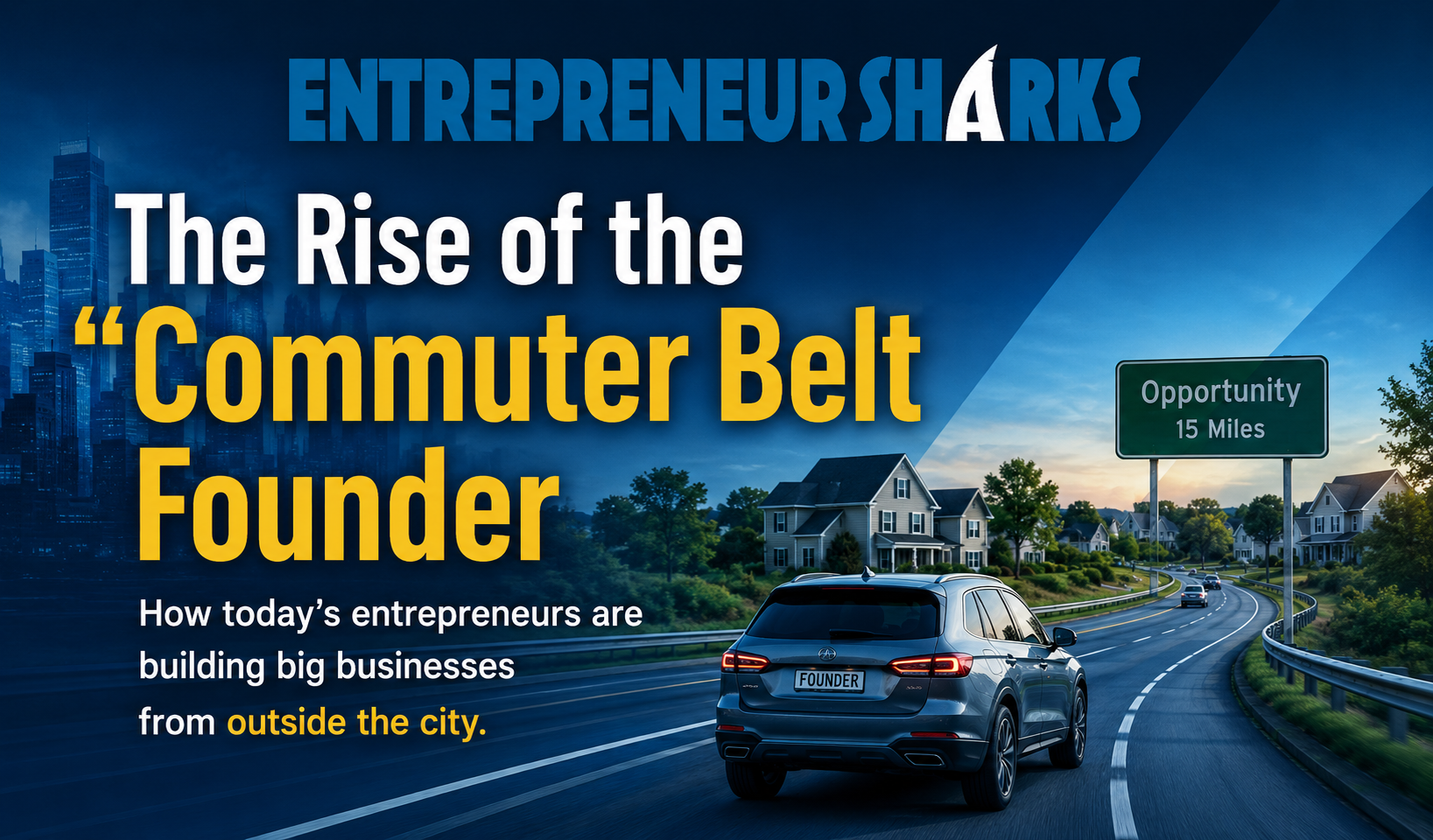
For years, the startup world revolved around one central belief: if you wanted to build a successful company, you had to live in a major city. Entrepreneurs were expected to settle in places like San Francisco, New York City, or London, where investors, talent, and opportunities were concentrated within a few square miles. But a new generation of entrepreneurs is quietly changing that narrative. They are known as the “Commuter Belt Founders” — ambitious business builders who live outside major urban hubs while staying deeply connected to them through technology, transportation, and flexible work culture.
This shift is not just about geography. It reflects a broader transformation in how modern businesses are built, managed, and scaled. The rise of remote work, hybrid teams, affordable digital tools, and changing lifestyle priorities has made it possible for founders to operate from suburban towns, smaller cities, or even rural communities without sacrificing growth potential. In many ways, the commuter belt founder represents the future of entrepreneurship: connected globally, rooted locally, and free from the traditional boundaries of big-city startup culture.
A New Definition of Startup Geography
The term “commuter belt” traditionally referred to areas surrounding large metropolitan cities where people lived while traveling into urban centers for work. Today, however, the concept has evolved. Entrepreneurs are no longer commuting every day. Instead, they move fluidly between physical and digital workspaces, visiting cities only when necessary for meetings, networking, or investor relations.
Founders are increasingly choosing locations that offer a better quality of life while maintaining access to economic ecosystems. Instead of paying enormous rents in crowded business districts, many entrepreneurs now operate from quieter regions with lower living costs and more personal freedom. High-speed internet, cloud collaboration tools, and virtual communication platforms have effectively decentralized entrepreneurship.
The pandemic accelerated this trend dramatically. When offices closed and remote work became normalized, many startup leaders realized they no longer needed expensive headquarters to build influential companies. Teams could collaborate across countries, clients could be managed online, and investors became comfortable with virtual pitches. The barriers that once tied entrepreneurship to global cities began to disappear.
Why Founders Are Leaving Big Cities
One of the biggest reasons behind the rise of commuter belt founders is lifestyle sustainability. Traditional startup culture often glorified burnout, long office hours, and nonstop hustle. Major cities offered opportunities, but they also came with overwhelming pressure, rising costs, and exhausting competition.
Entrepreneurs today are prioritizing balance alongside ambition. Living outside crowded urban centers provides access to larger homes, cleaner environments, reduced expenses, and stronger family life. For founders raising children or seeking mental clarity, smaller communities can offer stability that fast-paced city life rarely provides.
Financial logic also plays a major role. Office rent, employee salaries, transportation costs, and everyday expenses are significantly lower outside primary tech hubs. This allows startups to extend their runway and allocate more resources toward product development, marketing, or hiring specialized talent.
The rise of hybrid work has further strengthened this movement. Many startups now operate without permanent offices, relying instead on coworking spaces, occasional city meetings, and distributed teams. Founders can remain close enough to major cities for networking opportunities while avoiding the financial and emotional burden of living directly within them.
Technology Made the Movement Possible
The commuter belt founder would not exist without the digital infrastructure of the modern economy. Cloud computing, video conferencing, project management platforms, and AI-powered productivity tools have completely transformed business operations.
A founder living two hours outside a city can now manage global teams in real time, attend investor meetings online, launch digital marketing campaigns instantly, and collaborate with developers across multiple time zones. Geography matters less than execution speed and communication quality.
Platforms like Zoom, Slack, and Notion have effectively become the modern startup office. Entrepreneurs can build operational systems from laptops without the need for expensive infrastructure.
Artificial intelligence is making the shift even more powerful. Solo founders or small remote teams can now automate tasks that once required entire departments. Marketing, customer support, analytics, scheduling, and content creation can all be streamlined using AI tools. This operational efficiency allows founders outside traditional hubs to compete with larger, city-based companies.
Investors Are Adapting Too
At one time, venture capital firms strongly preferred founders who lived close to them. Proximity created trust and easier communication. But investor attitudes are evolving rapidly.
Today, investors care more about market potential, execution capability, and scalability than postal codes. Many successful startups are emerging from secondary cities and suburban regions where founders can operate more efficiently and sustainably.
Some venture capital firms have even embraced the decentralization trend by actively seeking overlooked talent outside major tech hubs. They recognize that innovation is no longer limited to a handful of cities. In fact, founders operating in smaller markets often possess deeper community understanding and stronger operational discipline.
This change is also democratizing entrepreneurship. Talented individuals who previously could not afford to relocate to expensive cities can now build companies from their hometowns or regional communities. The startup ecosystem is becoming more geographically diverse than ever before.
Challenges Still Exist
Despite its advantages, the commuter belt founder model is not without challenges. Networking remains harder outside major business centers. Informal interactions, spontaneous collaborations, and in-person relationship building still play a major role in entrepreneurship.
Some founders also experience isolation when working remotely for long periods. Startup culture can thrive on energy, momentum, and community, which are sometimes easier to find in dense urban ecosystems.
Access to specialized talent may also be more limited in smaller regions, particularly for industries requiring advanced technical expertise. While remote hiring solves part of the problem, building strong company culture across distributed teams requires intentional leadership.
Additionally, certain industries still depend heavily on physical proximity. Media, entertainment, finance, and hardware startups often benefit from being close to industry hubs and infrastructure networks.
However, many commuter belt founders are learning to balance both worlds. They maintain flexible schedules that combine remote living with periodic travel into major cities. This hybrid approach allows them to access opportunity without sacrificing lifestyle quality.
The Future of Entrepreneurship
The rise of the commuter belt founder signals a larger cultural shift in business leadership. Success is no longer defined solely by where a company is headquartered or how impressive its office appears. Instead, modern entrepreneurship is becoming increasingly outcome-driven, flexible, and decentralized.
Young entrepreneurs entering the startup world are questioning outdated assumptions about work and success. They want freedom alongside achievement. They value sustainability as much as scale. They believe companies can be globally competitive without requiring founders to sacrifice personal well-being.
As transportation improves, remote infrastructure expands, and digital collaboration becomes even more advanced, commuter belt entrepreneurship will likely continue growing. Smaller cities and suburban communities may become powerful innovation centers in their own right.
The future founder may no longer be someone sitting inside a crowded downtown skyscraper. Instead, they may be building a global company from a quiet town just outside the city — connected to the world, but no longer confined by it.
Also Read:-
Green Jet Fuel Driving Oxford’s Deep Tech Revolution
Omnea: The AI Procurement Startup Leading UK Charts
HIVED: Reimagining Parcel Delivery for the Green Economy