Introduction
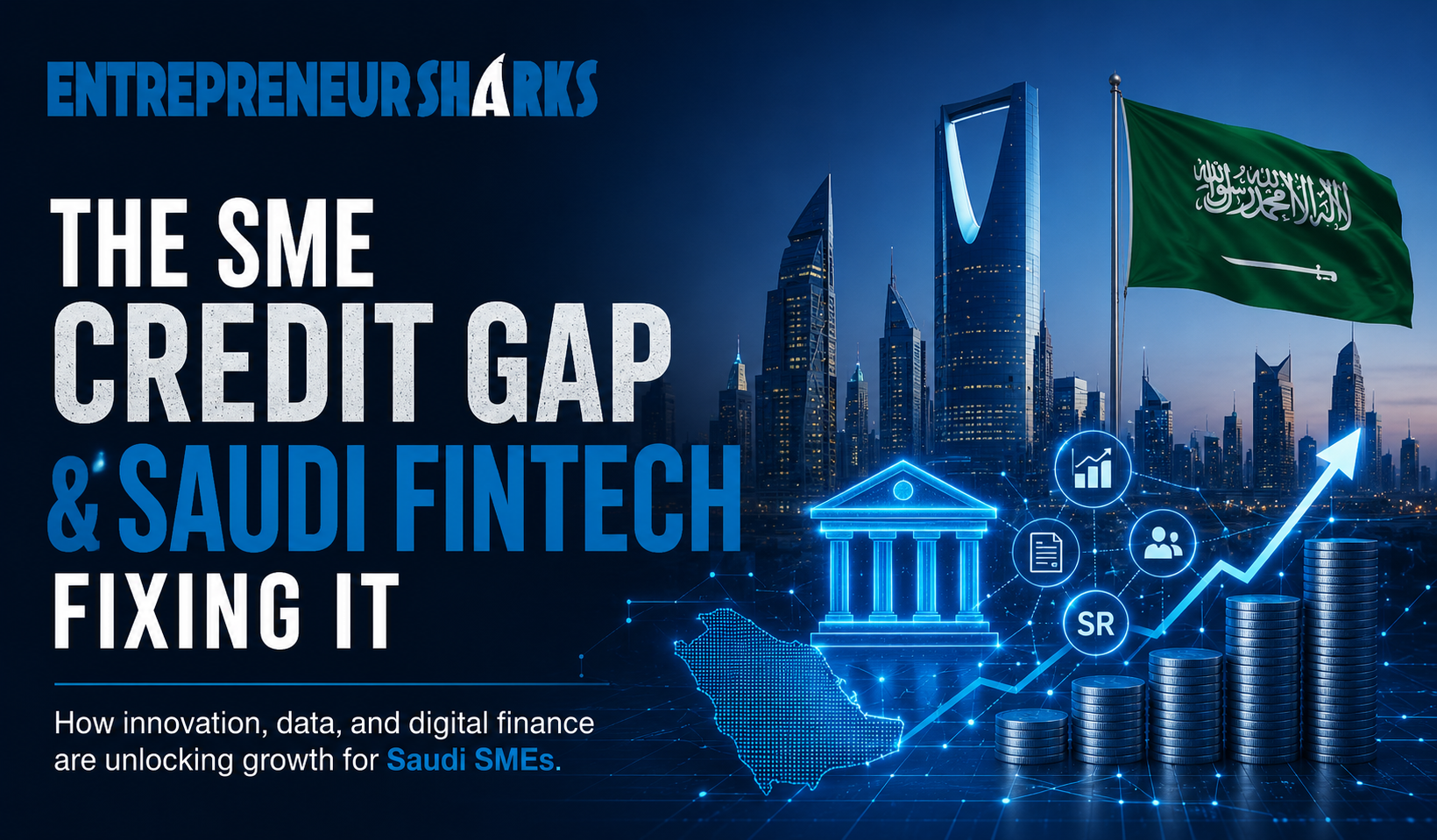
Small and Medium Enterprises (SMEs) are often described as the backbone of any modern economy. In Saudi Arabia, SMEs play a critical role in driving innovation, creating jobs, encouraging entrepreneurship, and supporting economic diversification under Vision 2030. Despite their importance, many SMEs across the Kingdom continue to face one major challenge: access to affordable and timely financing. This challenge is commonly referred to as the “SME credit gap.” It represents the difference between the amount of funding SMEs need to grow and the amount traditional financial institutions are willing or able to provide. Over the last few years, however, Saudi fintech companies have emerged as a transformative force, helping bridge this financing gap through technology-driven lending solutions, digital banking, alternative credit scoring, and embedded finance services.
Understanding the SME Credit Gap
The SME credit gap exists because traditional banks have historically viewed smaller businesses as risky borrowers. Many SMEs lack extensive financial records, audited statements, or collateral that banks typically require for loan approvals. Startups and young businesses often struggle even more because they have limited operational history. As a result, entrepreneurs face long approval processes, high rejection rates, and strict lending conditions.
In Saudi Arabia, SMEs contribute significantly to employment and non-oil economic activity, yet their share of total bank lending has remained relatively low compared to larger corporations. This imbalance has created a financing bottleneck that limits innovation, slows expansion, and reduces the ability of small businesses to compete in a rapidly evolving digital economy.
The issue became even more visible after the global pandemic, when many SMEs experienced reduced cash flow, disrupted supply chains, and declining customer demand. Businesses urgently needed working capital to survive, but traditional lending systems often moved too slowly to meet immediate financial needs. This created an opportunity for fintech companies to introduce faster, more flexible, and more inclusive financing solutions.
Rise of Fintech in Saudi Arabia
Saudi Arabia has rapidly become one of the leading fintech hubs in the Middle East. Strong government support, digital transformation initiatives, and increasing smartphone and internet penetration have created the ideal environment for fintech innovation. Regulatory bodies such as Saudi Central Bank and Capital Market Authority have also introduced fintech sandboxes and licensing frameworks that encourage innovation while maintaining financial stability.
As part of Vision 2030, the Kingdom aims to increase the contribution of SMEs to GDP and expand digital financial services. This has motivated both investors and entrepreneurs to focus on fintech solutions tailored specifically for underserved small businesses. Today, Saudi fintech startups are offering everything from digital payments and lending platforms to buy-now-pay-later services and AI-powered financial management tools.
How Saudi Fintech Companies Are Closing the Gap
Digital Lending Platforms
One of the most impactful fintech innovations in Saudi Arabia is digital SME lending. Unlike traditional banks that may take weeks or months to process loans, fintech lenders use automated systems and data-driven analysis to provide approvals within hours or days. This speed is especially valuable for SMEs dealing with urgent cash flow requirements.
Digital lenders analyze alternative data sources such as transaction history, payment behavior, e-commerce performance, and accounting software records to evaluate creditworthiness. This approach allows businesses without traditional collateral or long banking histories to access funding opportunities that were previously unavailable.
By simplifying the application process and reducing paperwork, fintech platforms are making financing more accessible to entrepreneurs across different industries, including retail, logistics, food services, healthcare, and technology.
Alternative Credit Scoring
Traditional credit scoring models often exclude smaller businesses because they rely heavily on formal financial documentation. Saudi fintech firms are changing this by introducing alternative credit assessment methods powered by artificial intelligence and machine learning.
Instead of depending solely on balance sheets, fintech platforms evaluate real-time business activity. Factors such as sales trends, digital payment records, customer reviews, inventory movement, and utility payments can all contribute to a more accurate picture of a business’s financial health.
This innovation is particularly beneficial for startups, women-led businesses, and micro-enterprises that may not have access to conventional banking relationships. By expanding financial inclusion, fintech companies are enabling more entrepreneurs to participate in the Kingdom’s growing economy.
Embedded Finance Solutions
Embedded finance is another area where Saudi fintech is reshaping SME funding. Through embedded finance, lending and payment services are integrated directly into business platforms, e-commerce systems, and digital marketplaces.
For example, a small online retailer can access working capital financing directly from its e-commerce dashboard without visiting a bank branch. Similarly, logistics companies can receive invoice financing through integrated digital platforms that track deliveries and payment cycles.
This seamless experience reduces friction and helps SMEs obtain financing exactly when they need it. Embedded finance also improves operational efficiency and encourages digital adoption among businesses that previously relied on manual financial processes.
Government Support and Regulatory Innovation
Saudi Arabia’s fintech growth would not be possible without strong regulatory support. The government recognizes that financial technology is essential for economic diversification and SME development. Programs under Vision 2030 actively encourage entrepreneurship, digital transformation, and private sector growth.
The Saudi Central Bank has introduced regulatory sandboxes that allow fintech startups to test innovative products in a controlled environment before full market launch. This has accelerated innovation while ensuring compliance with financial regulations.
Government-backed initiatives and partnerships with financial institutions have also helped improve SME access to funding. In many cases, fintech firms collaborate with banks rather than compete directly against them. Banks provide capital strength and regulatory expertise, while fintech companies contribute agility, technology, and customer-centric innovation.
This collaborative ecosystem is creating a more balanced and inclusive financial landscape for Saudi businesses.
Challenges Still Facing the Sector
Although Saudi fintech has made impressive progress, several challenges remain. Cybersecurity and data privacy concerns continue to grow as more financial services move online. Fintech firms must invest heavily in secure digital infrastructure to maintain customer trust.
Financial literacy is another challenge. Many SME owners are still unfamiliar with digital financing solutions and may hesitate to adopt new technologies. Education and awareness campaigns are essential to help businesses understand the benefits of fintech services.
In addition, some fintech startups face difficulties scaling their operations due to competition, regulatory compliance costs, and the need for long-term profitability. Access to investment capital and strategic partnerships will remain important for sustaining growth in the sector.
The Future of SME Financing in Saudi Arabia
The future of SME financing in Saudi Arabia looks highly promising. As digital adoption continues to rise, fintech solutions are expected to become even more sophisticated and accessible. Artificial intelligence, open banking, blockchain technology, and real-time payment systems will likely play a larger role in shaping the next generation of financial services.
Saudi Arabia’s young, tech-savvy population and strong government support create a favorable environment for innovation. More entrepreneurs are launching digital-first businesses, and investors are increasingly viewing Saudi fintech as a high-growth opportunity.
Over time, the relationship between traditional banks and fintech firms is expected to evolve into deeper collaboration. Hybrid financial ecosystems combining banking stability with fintech innovation may ultimately provide SMEs with faster, smarter, and more personalized financial solutions.
Conclusion
The SME credit gap has long been one of the biggest barriers to small business growth in Saudi Arabia. Traditional financing systems often struggled to meet the needs of modern entrepreneurs, leaving many businesses underserved and underfunded. However, the rise of fintech is rapidly transforming the financial landscape.
Through digital lending, alternative credit scoring, embedded finance, and innovative payment technologies, Saudi fintech companies are making funding more accessible, efficient, and inclusive. Backed by Vision 2030 and strong regulatory support, the Kingdom is building a dynamic fintech ecosystem capable of empowering SMEs and accelerating economic diversification.
As technology continues to evolve, Saudi fintech firms are likely to play an even greater role in shaping the future of business finance. By closing the SME credit gap, these companies are not only supporting entrepreneurs but also contributing to a stronger, more resilient, and more diversified Saudi economy.
Also Read:-
From Oil to Algorithm: UAE’s Clean Energy Startups
UAE’s PropTech Boom in Q1 2026
Fintech Kings of the Gulf