What are the fastest growing sectors in the MENA startup ecosystem?
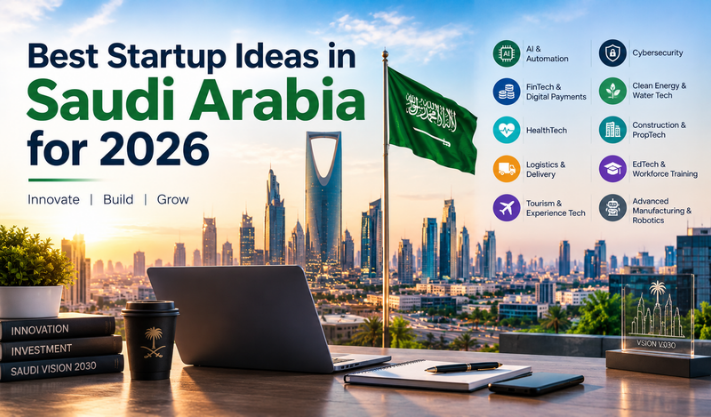
The fastest growing startup sectors in the MENA region are finance, artificial intelligence, e-commerce, healthtech, climate technology, logistics, mobility and enterprise software.
Fintech is also very relevant as several countries in the region are increasing digital payments, internet banking, embedded finance, and financial infrastructure. At the same time, AI is emerging as a key cross-cutting technology, enabling applications in healthcare, banking, education, government, cyber security and corporate operations.
Diversification away from conventional industries is generating impetus in other sectors across MENA nations.
Fintech
Fintech is one of the leading startup sectors in the MENA region and with good reason.
Fintech is expanding because consumers and businesses demand financial services to be speedier, digitised and available via mobile platforms.
Startups are building solutions for digital payments, banking, lending, wealth management, insurance, accountancy and financial management.
Artificial Intelligence
Artificial intelligence is a key opportunity for startups as firms across the area seek ways to automate operations, analyse data, personalise customer experiences and build new digital goods.
These AI businesses are pursuing fields such as generative AI, Arabic-language technology, enterprise automation, cybersecurity, computer vision and data analytics.
E-Commerce
The MENA digital consumer economy continues to generate prospects for online trade.
An increasing number of consumers are using mobile devices to locate products, compare prices, pay and make delivery arrangements.
Healthtech
Healthtech is garnering entrepreneurial attention since healthcare systems across the region are undergoing digital revolution.
Startups are building telemedicine systems, digital health records, remote monitoring solutions, healthcare marketplaces, pharmacy technology, diagnostic tools and AI-powered healthcare applications.
Climate Technology
Climate technology is playing an increasingly important role as MENA countries are striving harder to address water scarcity, energy efficiency, emissions, food security and transition to cleaner energy.
Start-ups are creating renewable energy, carbon management, water technology, sustainable agriculture, waste management, electric mobility and energy optimisation.
Logistics and Mobility
The growth of e-commerce and urban populations has increased demand for efficient transportation and delivery infrastructure.
Logistics startups are developing technology for last-mile delivery, freight management, warehousing, supply-chain visibility, and route optimization.
Enterprise Software
Enterprise software is another growing area because businesses across the region are digitizing their operations.
Startups are building platforms for human resources, accounting, customer relationship management, cybersecurity, procurement, collaboration, and business intelligence.
Which MENA countries have the biggest startup ecosystems?
Startup activity is concentrated in several markets, although the ecosystem extends across the wider region.
The United Arab Emirates has developed a strong startup environment around Dubai and Abu Dhabi, supported by technology infrastructure, international investors, free zones, accelerators, and business-friendly initiatives.
Saudi Arabia is expanding its technology and entrepreneurship ecosystem as part of its broader economic diversification agenda.
With a large population and growing digital economy, Egypt has a large technology and entrepreneurial community.
Other markets, including Bahrain, Jordan, Morocco, and Qatar, also contribute to the regional startup ecosystem through specialized sectors, accelerators, investors, and innovation programs.
What is fuelling startup growth across MENA?
There are a few things coming together to support the development of startups.
Economic diversification is encouraging countries to develop technology and knowledge-based industries.
Digital adoption is changing how consumers interact with businesses and public services.
Government initiatives are offering financial programs, incubators, accelerators, regulatory frameworks, and infrastructure.
Venture financing is helping promising firms expand beyond their initial markets.
A young population is also driving demand for mobile-first products and digital services.
What challenges do MENA startups face?
Rapid expansion does not mean the ecosystem is without issues.
Startups can face differences in regulations, payment systems, consumer behavior, and business practices between countries.
Expanding from one MENA market to another can therefore require extensive localization.
Access to later-stage investment can also be distinct from access to early-stage capital.
Startups need viable business concepts and the capacity to demonstrate strong client demand as they go beyond the initial fundraising rounds.
Talent is another key factor. Companies active in AI, cybersecurity, fintech and advanced technologies need specialised technical and managerial skills.
What does the future hold for the MENA startup ecosystem?
The MENA startup ecosystem is anticipated to become increasingly related to larger economic transformation across the region.
AI, finance, climate technology, healthtech, logistics, e-commerce, mobility and business software are clustered around important regional requirements from financial inclusion and digital commerce to resource efficiency and smart infrastructure.
The next phase of development depends not only on the number of startups produced, but also on their capability to build sustainable enterprises, recruit talent, expand into other countries and develop technology suitable for regional and international markets.
The biggest potential for entrepreneurs will likely be at the intersection of technology and a well-defined MENA-specific problem. As the startup ecosystem in the region matures, the variations across local markets will be crucial for investors and entrepreneurs to grasp.
Also Read:-
Why Human Leadership Still Beats AI in the Boardroom
Why Some Founders Fail Fast and Others Fail Forward Today
The New Rules of Executive Leadership in the AI Era